If you bid for government or donor-funded work in Nigeria, you will meet the BEME: the Bill of Engineering Measurement and Evaluation. Roads, culverts, drainage channels, boreholes and many public buildings are tendered with one. The client's engineer prepares it to estimate the job, and every contractor prices it to make their bid.
Build your BEME now
Numbered bills for roads, culverts, drainage, water or building works, your quantities and rates, and the General Summary with VAT and the amount in words. Print it, or download it as Excel.
Build a BEME →This guide explains what a BEME is, how it differs from a bill of quantities and from BESMM4, and how to put one together bill by bill.
What a BEME Is
A BEME is a list of every item of work in a project, grouped into numbered bills, with a quantity, a unit, a rate and an amount for each item. The bills add up to a General Summary, which adds a contingency and VAT to give the grand total. In short, it does for an engineering job what a bill of quantities does for a building.
It is used three ways:
- The engineer's estimate. The consultant or ministry engineer prices the BEME to know what the job should cost before it goes to tender.
- The bid. The engineer issues it unpriced (quantities filled in, rates blank). Each contractor fills in rates, and the totals are compared.
- Payments. During the job, the work done is measured against the same items, so the BEME is also the basis for interim payment certificates and variations.
BEME vs BoQ vs BESMM4
These three are often mixed up:
| What it is | Mostly used for | |
|---|---|---|
| BEME | A priced (or unpriced) bill for a project | Civil and engineering works: roads, bridges, culverts, drainage, water, power |
| Bill of quantities (BoQ) | A priced (or unpriced) bill for a project | Building works, prepared by quantity surveyors |
| BESMM4 | A rulebook from the NIQS that says how building and engineering work is measured and described | Preparing a BoQ the standard way |
So BESMM4 is not a document you submit. It is the set of rules you follow when you measure. A BEME and a BoQ are the documents themselves. Government building jobs (schools, health centres, offices) are sometimes tendered with a "BEME" too, but its items then look like a building BoQ: substructure, frame, walls, roof, finishes and services. If you need a BoQ in BESMM4 format for a building, see our guide to the BESMM4 bill of quantities format.
The Layout of a BEME
Every BEME has the same columns:
| Item | Description | Unit | Qty | Rate (₦) | Amount (₦) |
|---|---|---|---|---|---|
| 3.01 | Site clearance and grubbing | m² | 25,000 | ||
| 3.02 | Prepare and compact sub-grade to 95% MDD | m² | 25,000 |
Many clients add a Spec. Ref. column that points each item to the clause of the specification it must meet. Items are numbered by bill: item 3.02 is the second item in Bill No. 3. At the foot of each bill is a line "Total of Bill No. 3 carried to General Summary".
The Bills a Typical BEME Has
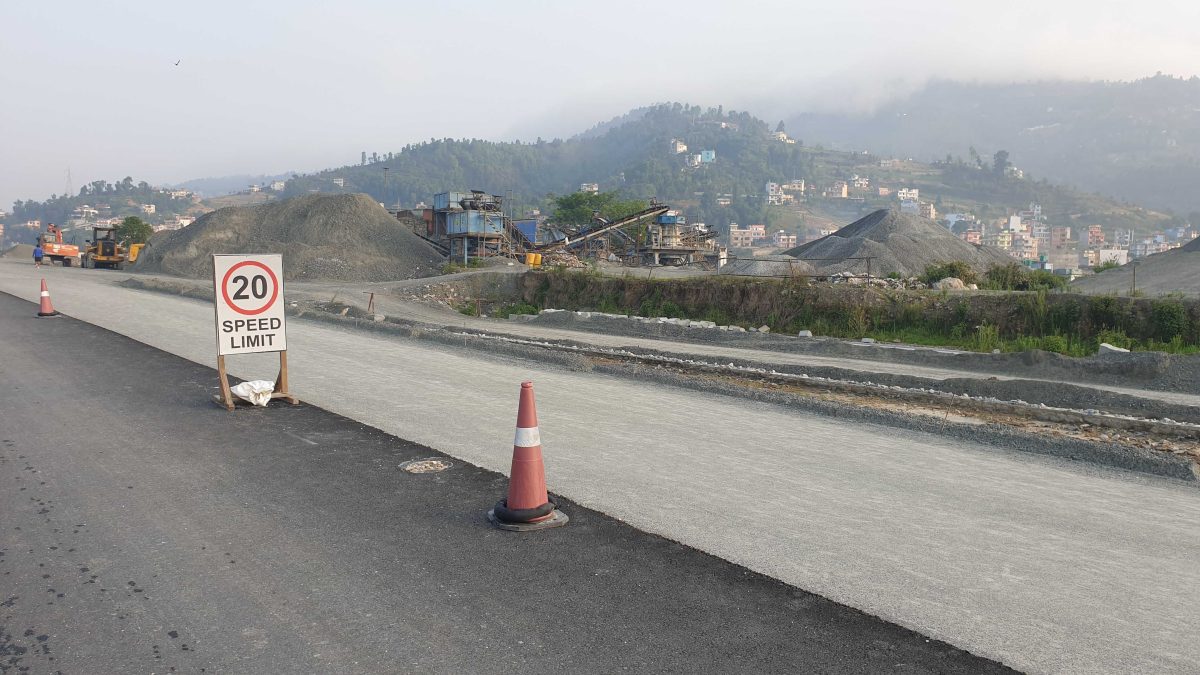
The bills change with the type of work, but a road or drainage BEME usually looks like this:
- Bill No. 1: Preliminaries / General Items. Mobilisation and demobilisation, the contractor's site office and stores, setting out and survey, traffic management, insurances and bonds, and facilities for the engineer: a site office, a vehicle, a laboratory for soil and concrete tests, progress reports. On big jobs this bill is large, so price it properly. Our guide to preliminaries explains each item.
- Site clearance and earthworks. Clearing, topsoil strip, cut to fill, imported fill from borrow pits, haulage, and preparing the sub-grade.
- Pavement (roads). Sub-base, base course, prime and tack coats, asphalt binder and wearing courses, or surface dressing.
- Drainage and structures. Line drains and U-drains, cover slabs, pipe culverts, box culverts, headwalls and wingwalls, scour checks, with concrete, reinforcement (in tonnes) and formwork measured separately.
- Road furniture and ancillary works. Kerbs, road markings, signs, guard rails, street lights and grassing of verges.
- Provisional sums and daywork. Sums for things nobody can measure yet (relocating services, compensation, extra tests, unforeseen works) and hourly rates for labour and plant used on daywork. These are spent only on the engineer's written instruction.
A water project swaps the pavement bill for drilling, pumping and storage, and reticulation. A building BEME uses building bills instead.
The General Summary
The last page lists each bill's total, then:
- Sub-total of all the bills;
- Contingency, usually a percentage of the sub-total, for the unknowns;
- VAT at 7.5%;
- Grand total, and the amount in words ("One Billion, Five Hundred and Forty Million… Naira Only").
In a BEME the contractor's overheads and profit are built into each rate. There is no separate "profit" line, so every rate you enter must already carry your share of overheads, risk and margin.
How to Prepare a BEME, Step by Step
- Read the drawings and the specification. Know what is being built and which clauses apply to each kind of work.
- Set out the bills. Start from the bill list above and keep only the bills the job needs.
- Measure the quantities. Take them off the drawings: areas of clearing and pavement layers, volumes of cut, fill and concrete, lengths of drains and kerbs, numbers of culverts and signs, tonnes of reinforcement.
- Write clear descriptions. Say what, where and to what standard: "Crushed stone base course, 150 mm compacted" is better than "base course". Put the clause in the Spec. Ref. column.
- Build up the rates. For each item: materials (with waste and haulage), labour, plant, then a share of overheads and profit. Check them against current material prices in your area.
- Price Bill No. 1 last. Once you know the duration and the size of the job, price the preliminaries and the engineer's facilities for that length of time.
- Add the provisional sums and daywork rates that the tender documents ask for.
- Complete the General Summary: bills, contingency, VAT, grand total, amount in words. Check that each bill total carried to the summary matches.
- Sign it: the bidder signs and stamps a priced BEME; the engineer signs an estimate with their COREN number.
Common Mistakes
- Under-pricing the general items. The engineer's office, vehicle and laboratory run for the whole contract: price them per month for the real duration.
- Forgetting haulage. Fill from a borrow pit 15 km away costs far more than the same fill from 2 km.
- Rates without overheads. Since there is no profit line, a bare material-and-labour rate means working for free.
- Arithmetic slips. A wrong total carried to the summary can disqualify a bid. Use formulas, and check the amount in words against the figure.
- Changing the client's items. When you price a client's BEME, keep their numbering and descriptions exactly. Put any concerns in a covering letter.
A Faster Way to Prepare One
Our free BEME builder sets up the bills for road and bridge, culvert, drainage, water, electrical and building works, with ready-written descriptions you can edit and your own items wherever you need them. It numbers the bills and items, builds the General Summary with contingency, VAT and the amount in words, and prints a clean BEME. Contractors can price it as their bid. Engineers can print it unpriced to issue to bidders. With the unlock you can download it as an editable Excel file where every total is a formula.
Looking for jobs to bid on? Every listing on our construction tenders page has a Build a BEME button that opens the builder filled in from that tender. If your BEME has a bill or a layout the builder doesn't cover yet, tell us from the box inside the builder and we'll add it.
Build Your BEME
Pick the type of work, enter your quantities and rates, and print a numbered BEME with the General Summary, VAT and the amount in words. Free to use.
Open the BEME Builder →