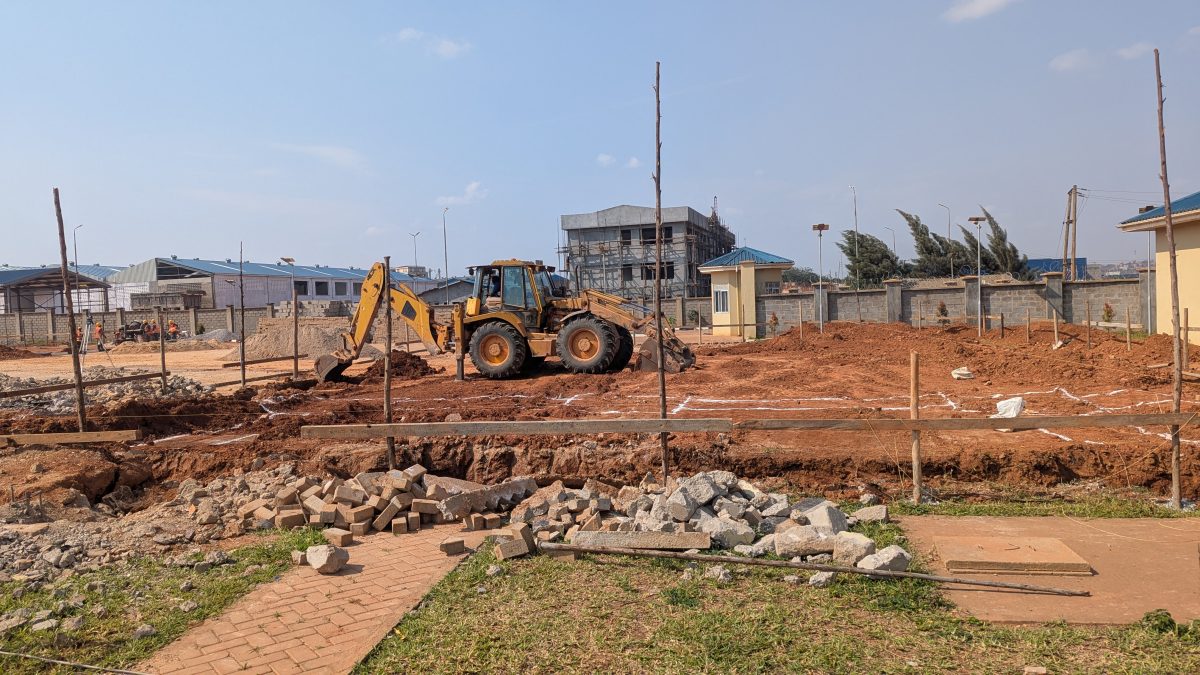
Almost every Nigerian abroad knows a story: money sent home for a house that turned out to be a foundation and a lot of excuses. Sometimes it is dishonesty. More often it is a mix of rising prices, poor records, unclear agreements and a person on the ground who was never really in charge. You cannot remove every risk from 5,000 kilometres away, but you can set the project up so that problems show early and money only goes out for work that has been done.
Keep track of your build from anywhere
Track My Build keeps your spending, stages and site photos in one place, so you can see how the work is going.
Try Track My Build →This guide covers the big decisions. For the week-to-week routine once work has started, read our companion guide on how to monitor a building project in Nigeria remotely.
1. Before Anything Else: Check the Land
A house on land you do not securely own is the worst outcome of all, and no amount of site supervision fixes it. Before you pay for anything else:
- Get the documents: survey plan, the title (C of O, Governor's Consent or registered deed) and the seller's evidence of ownership.
- Search at the land registry in the state, through a lawyer you choose, not one recommended by the seller.
- Check the survey plan with the surveyor-general's office, so you know the land is not under government acquisition or a road setback.
- Visit, or have someone independent visit, to confirm the plot on the ground matches the plan and nobody else is in possession.
Our guides on survey plan costs and land prices by area help with the numbers.
2. Decide Who Runs the Build
This is the most important decision you will make. The usual options are:
| Who runs it | Advantages | Risks |
|---|---|---|
| A family member or friend | Trust, low cost, local knowledge | Little building knowledge, hard to question, relationships suffer if things go wrong |
| A contractor on a fixed price | One party responsible for cost and quality | Higher price; quality can be cut to protect profit if nobody checks |
| Direct labour with a site manager | Cheapest on paper, full control | You carry every price rise and every mistake; needs very close tracking |
| A contractor plus an independent QS or engineer | Someone checks the work and the bills for you | Extra fee, usually a few percent of the cost |
Whichever you choose, separate the person who does the work from the person who confirms the work is done. A family member can still play a part, for example visiting the site or receiving deliveries, without being the only check on the money.
3. Put the Agreement in Writing
Even with family, write down:
- the drawings and specification being built (what blocks, what roof, what finishes);
- the price, or how the price will be worked out if it is direct labour;
- the stages of work and what "complete" means for each;
- how and when payments are made;
- how changes are agreed and priced;
- how often you get updates and what they include.
If you are using a contractor, ask for a proper quotation or a building proposal with a programme and payment stages, and compare it against a cost estimate for the same building before you accept it.
4. Pay in Stages, Against Work You Can See
Never send the money for the whole house, or even a whole floor, in one go. Agree payment stages tied to visible progress, for example:
- Mobilisation and setting out (a small advance)
- Foundation and blockwork to DPC
- Walls to lintel level
- Roof covered
- Services and plastering
- Finishes and handover
Release each payment only when photos, a video walk-through and, ideally, an independent visit confirm the stage is done. For contractors, an interim valuation works out what the completed work is worth. A cash flow plan shows when each amount will be needed, so you can plan transfers.
Where you can, pay suppliers directly for big items such as cement, rods and roofing sheets, instead of sending cash to the site. You then know what was bought and at what price.
5. Think About Exchange Rates
If you earn in pounds, dollars or euros, the naira rate changes how far your money goes. A few practical points:
- Budget in naira, because that is how materials and labour are priced, but keep a note of the rate at which each transfer was made.
- Avoid converting large sums far ahead of when they are needed unless you have a clear reason; the money can sit idle or be spent on other things.
- If the naira weakens sharply, imported items (tiles, sanitary ware, aluminium, solar) usually rise first. Local labour moves more slowly.
Our weekly building cost news roundup tracks the naira and material prices.
6. Get Independent Eyes on the Work
Photos show progress, but they do not show whether the concrete mix was right, how many rods are in a column or whether the foundation was dug deep enough. At key points, pay an independent engineer or QS to visit:
- before the foundation concrete is poured (trench depth, width and reinforcement);
- before each slab or beam is cast (rods, formwork and props);
- before the roof goes on (wall plate, trusses);
- at the end, before the final payment.
A short report with photos from each visit costs far less than fixing a failed slab.
7. Set Up Regular, Factual Updates
WhatsApp photos are welcome, but they are scattered and easy to stage. What you want is a short, regular record that you can look back on:
- a daily note and photo from the site, or a reason why no work happened;
- who was on site, ideally with a check-in photo and location;
- what materials arrived and what was used;
- every payment, against the budget line it belongs to.
That is what Track My Build is for. Your site manager records it from a phone browser, without installing an app, and you follow it from your dashboard or a short email in the evening on days with activity. You see the budget, how much has been spent and what is left, and the stages ticking off. Your title documents, approvals, drawings and receipts sit in the project's Documents tab, so they are not on one relative's phone.
8. Plan Your Visits
If you can visit, time it for the moments that matter: setting out (to confirm the building is where it should be on the plot), before the first slab, and before the final payment. Use the visit to meet your site manager, the engineer and key suppliers in person, and count materials in the store against the records.
Frequently Asked Questions
Can I build a house in Nigeria while living abroad?
Yes, many people do. The ones who succeed secure the land first, put the agreement in writing, pay in stages against verified work, use independent inspections at key stages and keep a proper record of every payment.
Should I use a family member to manage the build?
A family member can help, but should not be the only check on the money or the quality. Separate the person doing the work from the person confirming it is done, and keep records that everyone can see.
How do I know my money is being used properly?
Ask for receipts for every purchase, pay big suppliers directly where you can, compare prices with current material prices, and check that spending on each stage matches progress on site.
How much does it cost to build a house in Nigeria?
It depends on the size, city and finish level. Use the free Quick Estimator for a figure for your own design in a couple of minutes.
See Your Build From Wherever You Are
With Track My Build, your site manager logs progress, photos, workers and spending from a phone, and you follow the budget, stages and photos from your dashboard or a short evening email. Keep your title documents, approvals and drawings in the same place.
See Track My Build →