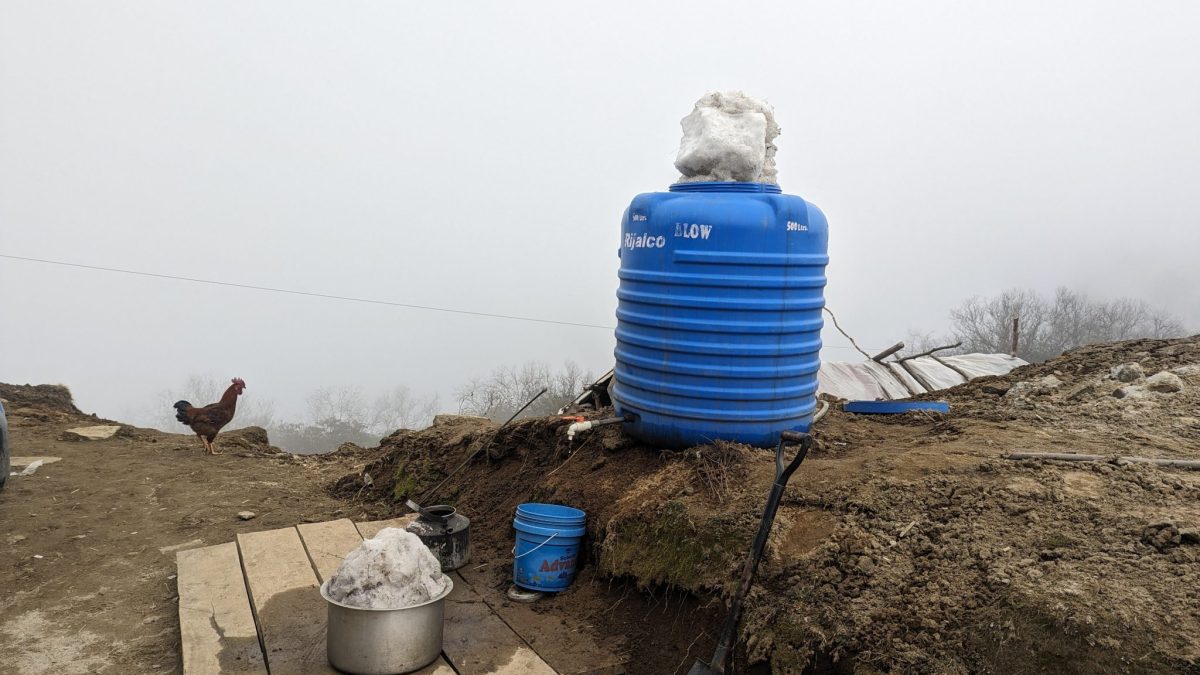
Water storage in Nigeria is not a convenience feature — with municipal and even borehole supply often intermittent, the tank sitting on a steel or blockwork stand behind most homes is what actually keeps water running through the taps day to day. Getting its size wrong means either running dry between fills or paying for storage capacity that never gets used. This guide explains how to size a tank correctly and sets out 2026 pricing, using the logic behind our free Water Tank Calculator.
Daily Water Consumption: The Starting Number
Sizing a tank starts with estimating daily household water demand. A commonly used planning figure for Nigerian residential use is roughly 150–200 litres per person per day, covering drinking, cooking, bathing, laundry and general household use — higher where a household has features like a washing machine in frequent use, multiple full bathrooms, or a garden needing regular watering; lower for a more modest, water-conservative household.
| Household size | Estimated daily demand (at 175L/person) | Recommended minimum tank size (1–2 days reserve) |
|---|---|---|
| 3–4 people | 525–700 litres/day | 1,000–1,500 litres |
| 5–6 people | 875–1,050 litres/day | 2,000 litres |
| 7–10 people | 1,225–1,750 litres/day | 2,500–3,500 litres, or multiple tanks |
The "1–2 days reserve" principle matters because Nigerian water supply — whether municipal, borehole, or delivered by tanker — is rarely available every single day without interruption. Sizing a tank to hold only a single day's demand leaves no buffer if a scheduled fill is delayed by a day, a common enough occurrence to plan around rather than hope against.
2026 Water Tank and Stand Pricing
Pricing for the most common option — a plastic polyethylene tank on a stand — starts from a reference figure of roughly ₦95,000 for a 2,000-litre tank complete with stand. Larger tanks and taller stands (needed for greater gravity-fed pressure to upper floors) cost proportionally more, though not in a strictly linear way — a 5,000L tank typically costs less per litre of capacity than a 1,000L tank, since a meaningful part of the price is the stand structure and installation labour that does not scale directly with tank volume.
Tank Material: Plastic vs Concrete
Plastic polyethylene tanks dominate the Nigerian residential market because they are lightweight, quick to install, corrosion-proof, and available in a wide range of standard sizes off the shelf from most building material suppliers. Concrete tanks, built in place, are more labour-intensive and slower to construct but can be a sensible choice for very large capacity requirements (commercial or institutional buildings needing tens of thousands of litres) where a correspondingly large plastic tank becomes impractical to source, transport or elevate on a stand.
Stand Height and Water Pressure
A water tank's stand height directly determines the gravity-fed water pressure available at taps below it — a taller stand delivers more pressure, which matters particularly for a multi-storey building where upper-floor fixtures need enough head (height difference) between the tank and the tap to flow adequately without needing a booster pump. As a rough guide, the tank base should sit at least a few metres above the highest point it needs to supply for reasonable gravity pressure; a booster pump can compensate for a shorter stand where structural or aesthetic constraints limit stand height, at the cost of the pump itself and its ongoing power consumption.
Worked Example: A 3-Storey Family Home
A household of 7 people in a 3-storey building:
- Estimated daily demand: 7 × 175L ≈ 1,225 litres/day
- Recommended capacity (2-day reserve): ~2,500 litres, rounding to the nearest standard size, 3,000 litres
- Tank and stand (3,000L, incl. taller stand for 3rd-floor supply): approx. ₦145,000 (scaled from the 2,000L baseline reference, plus taller stand allowance)
- Booster pump (recommended for reliable 3rd-floor pressure): ~₦120,000
Total: roughly ₦265,000 for a complete, adequately sized water storage solution for this household.
Common Water Tank Sizing Mistakes
- Sizing for exactly one day's demand. This leaves no buffer against a delayed fill and is a common cause of running dry mid-week.
- Ignoring stand height needs on a multi-storey building. An undersized stand height on a 2- or 3-storey home leads to weak pressure at upper floors, a frequent post-completion complaint that is expensive to fix retroactively.
- Not planning for future household growth. A household expecting to grow should size the tank (and ideally the stand's structural capacity for a future larger tank) with some margin.
- Choosing a stand without confirming it can carry the tank's full weight when filled. A tank full of water is very heavy — the stand structure must be properly engineered for the fully loaded weight, not just the empty tank.
Combining Tank Storage With a Borehole or Municipal Supply
Most Nigerian homes with a water tank draw from more than one source — a borehole, municipal supply, or tanker delivery feeding into the storage tank, which then supplies the house. Understanding how these sources interact with tank sizing matters: a borehole with a reliable, high-output pump that can refill the tank quickly needs less storage reserve than a household relying on an intermittent tanker delivery schedule, since the practical risk of running dry between refills differs significantly between the two supply patterns.
Where a borehole is the primary source, the pump's output rate relative to household peak demand also matters — a pump that struggles to keep pace with simultaneous high-demand periods (multiple bathrooms in use, laundry running) can leave the tank perpetually low even with adequate nominal capacity, pointing to a pump sizing issue rather than a tank sizing one. See our Borehole Calculator for pricing a properly matched pump and borehole system alongside your tank.
For households relying partly or fully on tanker-delivered water, tank capacity should be sized with a larger reserve margin than the 1–2 day guidance in this article, since tanker delivery schedules can be considerably less predictable than a borehole or municipal connection, and a missed or delayed delivery with minimal storage buffer is a more disruptive event than a similarly delayed borehole pump cycle.
Frequently Asked Questions
How much water does an average Nigerian household use per day?
A commonly used planning figure is 150–200 litres per person per day, though actual usage varies with household habits, number of bathrooms, and whether laundry and gardening draw significantly from the same supply.
Do I need a booster pump if I have a water tank on a stand?
Not always — a sufficiently tall stand can provide adequate gravity pressure for a single or double-storey building. A booster pump becomes more valuable for taller buildings or where stand height is limited by site or aesthetic constraints.
Is a bigger tank always better?
Not necessarily — beyond a reasonable reserve margin (1–2 days of demand), a much larger tank than needed adds unnecessary cost and structural stand requirements without a proportional practical benefit, unless water supply in the area is unusually unreliable and a longer reserve genuinely makes sense.
Should overhead and underground/ground-level tanks be used together?
Yes, this two-tank arrangement is common — a larger ground-level or underground tank serves as the main reserve, fed by the borehole or mains supply, with a smaller overhead tank filled from it by pump to provide gravity pressure to the house. This combination offers more total reserve capacity than a single elevated tank of practical size while keeping the elevated tank (and its structural demands) modest.
How do I know what size stand my house needs?
This depends on the height of your highest fixture needing adequate pressure and the acceptable minimum head (vertical distance between the tank base and that fixture) for reliable gravity flow — as a rough starting guide, at least 2–3 metres of head above the highest point being supplied is commonly recommended, though your plumber or the tank supplier can confirm the specific figure for your building's layout.
Does tank material affect the taste or quality of stored water?
Food-grade, UV-stabilised polyethylene tanks, which are the standard for Nigerian residential use, are designed not to affect water taste or quality when properly manufactured — always confirm a tank is specifically rated for potable water storage rather than a generic industrial tank not intended for drinking water use.
What is the relationship between tank capacity and pump run time?
A larger tank generally needs the pump to run less frequently but for longer periods per cycle to refill, while a smaller tank triggers more frequent, shorter pump cycles — very frequent short cycling can increase wear on some pump types, which is a secondary but genuine reason to avoid undersizing tank capacity purely to save on the tank's own cost.
Size Your Water Storage
The free Water Tank Calculator works out the right tank size and stand cost from your household size. Need a borehole too? Try the Borehole Calculator. Building the whole house? The Professional Estimator covers water supply and plumbing throughout.
Open the Water Tank Calculator →
