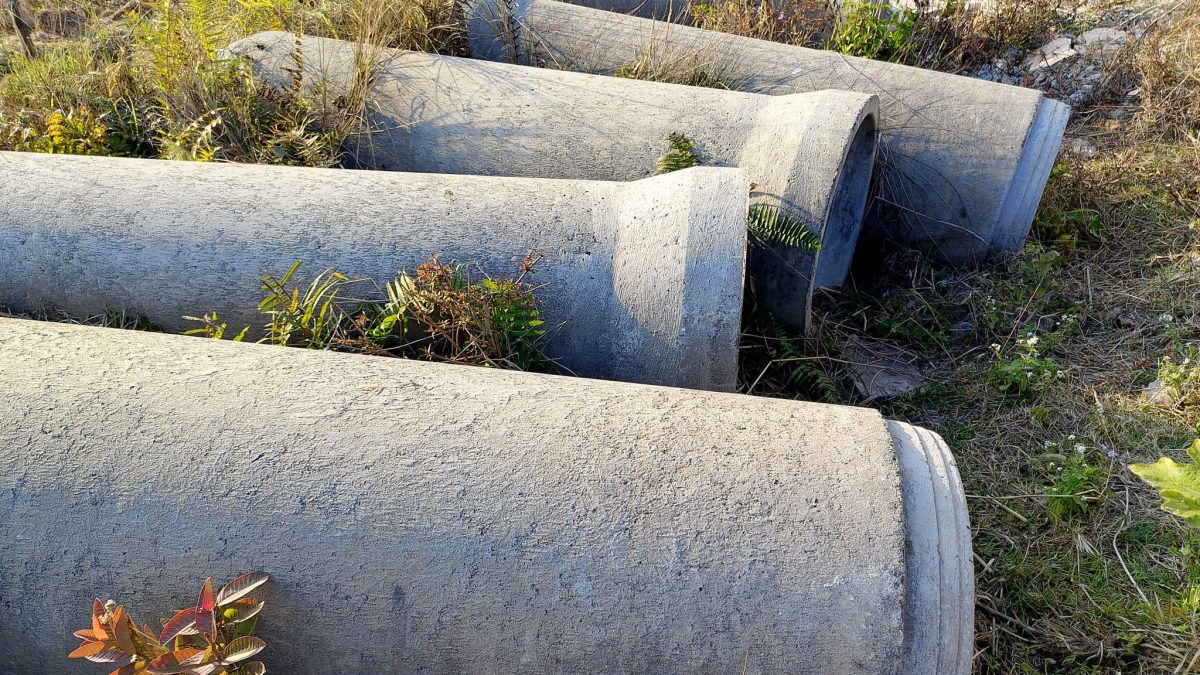
A septic tank is buried, invisible once complete, and easy to under-budget precisely because nobody sees it after installation — until it is undersized and starts causing problems. This guide sets out 2026 Nigerian pricing by capacity, what a complete system actually includes beyond the tank itself, and a worked example, using the sizing logic behind our free Septic Tank Calculator.
Septic Tank Prices by Capacity, 2026
| Capacity | Typically suits | Indicative price, supply + install (₦) |
|---|---|---|
| 1,000 litres | Small household, up to ~4 occupants | ~380,000 |
| 2,000 litres | Standard family home, ~5–8 occupants | ~580,000 |
| 3,000 litres | Larger household or a house with frequent guests/staff quarters | ~780,000 |
Notice the price does not scale linearly with capacity — going from 1,000L to 2,000L (double the capacity) costs roughly 53% more, not 100% more, because a meaningful share of the total cost is fixed excavation, formwork and installation labour that does not double just because the tank is bigger. This is one reason it rarely pays to undersize a tank purely to save a modest amount upfront.
What "Supply and Install" Actually Includes
A complete septic tank installation is more than the tank chamber itself:
- Excavation: digging the pit to the tank's depth, which needs enough clearance around the tank for construction and backfilling.
- The tank structure: either a precast concrete/plastic tank lowered into the excavation, or a brick/block-built chamber constructed in place, depending on the specification chosen.
- Inlet and outlet pipework: connecting the tank to the house drainage on the inlet side and to the soakaway or discharge point on the outlet side.
- Vent pipe: allowing gases from decomposition to escape safely above roof or boundary level.
- Cover slab and access: a removable or lockable access cover for future desludging.
- Backfilling: returning and compacting soil around the completed tank.
Septic Tank vs Soakaway: Two Different Costs
A septic tank and a soakaway pit serve different functions and are priced separately — the septic tank treats and settles solid waste, while the soakaway allows the treated liquid effluent to disperse safely into the surrounding soil. A soakaway pit (excavate, fill with graded aggregate, and cap) is priced at roughly ₦120,000 as a standalone item, separate from the septic tank cost above, and is a necessary companion to almost every septic tank installation unless the site connects to a mains sewer, which remains uncommon outside a small number of Nigerian developments.
Worked Example: A 4-Bedroom Family Home
A family of 6 (parents, four children) plus occasional live-in staff, effectively an 7–8 person occupancy for sizing purposes:
- Recommended capacity: 2,000–3,000 litres — take the 2,000L tank as a baseline, with 3,000L as a safer margin if the household regularly hosts extended family or guests
- Septic tank (2,000L, supply + install): ₦580,000
- Soakaway pit: ₦120,000
- Connecting drainage pipework (allowance): ₦60,000
Total: roughly ₦760,000 for a complete septic and soakaway system for this household. Choosing the 3,000L tank instead adds roughly ₦200,000 to the tank cost — a reasonable additional investment if the household size or guest frequency suggests the smaller tank might need more frequent desludging.
Common Septic Tank Costing Mistakes
- Sizing for current occupancy only, ignoring future growth. A tank sized exactly for today's household with no margin can be undersized within a few years as a family grows or extended family moves in.
- Forgetting the soakaway in the budget. A septic tank without an adequate soakaway or discharge point is an incomplete, non-functional system — always budget for both together.
- Choosing the cheapest tank without checking material quality. A poorly constructed or substandard tank can crack or leak within a few years, an expensive problem to fix once the compound is finished and landscaped over it.
- Ignoring soil conditions for the soakaway. A soakaway's effectiveness depends on the surrounding soil's ability to absorb liquid — heavy clay soil may need a larger or differently designed soakaway, or an alternative discharge solution, which should be assessed before finalising the design.
Septic Tank Materials: Precast Concrete, Block-Built, and Plastic
Septic tanks in Nigeria are built or supplied in several different ways, each with a different cost and durability profile worth understanding before choosing a supplier. A block-built tank, constructed in place from sandcrete blocks and properly rendered internally with a waterproof coating, is common on many self-build projects since it uses skills and materials readily available on almost any site — the quality of the internal waterproofing render is critical here, since a poorly sealed block tank can leak untreated effluent into surrounding soil, a genuine health and environmental concern.
Precast concrete tanks, manufactured off-site to a standard design and lowered into the excavated pit, offer more consistent quality control than an in-situ block-built tank, since the manufacturing conditions are controlled and repeatable rather than dependent on a specific site crew's execution on a given day. Plastic (polyethylene) septic tanks, lighter and easier to handle during installation, are increasingly available in the Nigerian market and offer corrosion-proof, leak-proof construction by design, though they need careful backfilling to avoid distortion under soil pressure once installed, since they lack the inherent rigidity of a concrete tank.
Whichever construction method is chosen, the tank's internal baffle walls — which separate the settling chambers and allow solids to properly settle while directing liquid effluent onward to the soakaway — are a critical functional detail that should not be omitted or under-specified regardless of the shell material, since a tank without properly functioning baffles behaves more like a simple holding tank than a genuine treatment system.
Frequently Asked Questions
What size septic tank do I need for my house?
It depends primarily on occupancy — a 1,000L tank suits a small household of up to about 4 people, 2,000L suits a typical family of 5–8, and 3,000L suits larger households or those with frequent guests or staff. Use the calculator with your actual or expected occupancy for a specific recommendation.
How often does a septic tank need desludging?
This depends on tank size relative to actual usage, but a properly sized tank for the household typically needs desludging every 2–5 years — an undersized tank for its occupancy will need it more frequently, adding an ongoing cost that a correctly sized tank avoids.
Can I build a septic tank myself to save money?
A septic tank is a sanitation system with real health and environmental consequences if built incorrectly — inadequate wall thickness, poor sealing, or an undersized soakaway can lead to leakage, contamination of groundwater, or system failure. This is not an area to cut corners on without proper construction expertise.
How close to a water source or well can a septic tank be built?
Regulatory and good-practice minimum distances vary, but a septic tank and its soakaway should always be positioned a meaningful, deliberate distance from any borehole, well or other water source on the plot or a neighbouring one, to avoid the risk of effluent migrating through soil into the water supply — check local guidance and involve a competent contractor in siting decisions rather than placing the tank purely for construction convenience.
Does a septic tank need a vent pipe, and why?
Yes — a vent pipe allows gases produced by the natural decomposition process inside the tank to escape safely above occupied areas, rather than building up pressure inside the tank or seeping into the building through drains. Omitting or undersizing the vent is a common shortcut that can lead to odour problems and, in more serious cases, pressure-related issues within the system.
How much does it cost to relocate a septic tank if it was sited poorly?
Relocation involves excavating a new pit, constructing or installing a new tank, running new connecting pipework, and properly decommissioning the old tank — effectively most of the cost of a fresh installation, which is exactly why getting the initial siting right, with proper consideration of water sources, access for future desludging trucks, and distance from the building, matters so much at the early planning stage of any project.
Are there Nigerian standards or regulations governing septic tank design?
Various Nigerian states and the National Building Code set out general requirements for sanitation systems including septic tanks, covering matters like minimum distances from water sources and structures — check with your local building control authority for the specific requirements applicable in your area before finalising the design and siting of the system on your plot.
Should septic tank cost be included in the main building estimate or budgeted separately?
It is typically included as part of the substructure or mechanical and electrical section of a full building estimate, alongside other drainage and sanitation items, rather than treated as an entirely separate project — our Professional Estimator includes it within a complete house budget for exactly this reason.
Size and Price Your Septic Tank
The free Septic Tank Calculator sizes your tank from occupant count and prices the complete supply and install. Also need water storage sorted? Try the Water Tank Calculator. Building the whole house? The Professional Estimator covers drainage and sanitation too.
Open the Septic Tank Calculator →
