Nigeria has minimal public sewerage infrastructure. Outside of a few city centre areas of Lagos, Abuja, and Port Harcourt, virtually all Nigerian properties rely on on-site sewage disposal — typically septic tanks with soakaway fields. An estimated 95% of Nigerian households manage their own sewage on-site, yet septic tank design and sizing remain poorly understood by many builders and developers.
An undersized or poorly constructed septic tank fills up rapidly, causes sewage backup into the building, emits odours, contaminates groundwater (a serious health risk in areas that also rely on borehole water), and eventually fails structurally. The cost of a properly designed septic system is a tiny fraction of the cost of remediating a sewage contamination problem — yet many Nigerian buildings are still constructed with inadequate systems to save on upfront cost.
Our free Septic Tank Calculator helps you size a septic system correctly to Nigerian standards and estimate its construction cost at 2026 rates.
How a Nigerian Septic System Works
A standard Nigerian septic system has two main components:
1. The Septic Tank
A watertight underground chamber that receives all wastewater from the building (toilets, bathrooms, kitchens). Inside the tank, solid waste settles to the bottom as sludge, grease and oil float to the top as scum, and partially clarified liquid (effluent) remains in the middle layer. Anaerobic bacteria break down the sludge over time. The tank must be desludged (pumped out) every 2 to 5 years depending on usage and tank sizing. The clarified effluent is discharged through an outlet pipe to the soakaway.
2. The Soakaway (Leach Field)
A series of perforated pipes laid in gravel-filled trenches, through which the septic tank effluent disperses into the surrounding soil. The soil provides final treatment through filtration and biological action. The soakaway must be sized to the soil's percolation rate (how quickly water drains through the soil) — poor Nigerian soils with clay content can have very slow percolation, requiring larger soakaway areas.
Nigerian Septic Tank Size Requirements
The Nigerian Industrial Standard for septic tank design (NIS 531) provides minimum sizing guidance. The key formula is based on the daily wastewater flow, combined with a minimum retention time of 24 to 48 hours:
Tank volume (litres) = Daily flow × Retention time × Sludge accumulation factor
Minimum daily wastewater flow rates by building type:
- Residential (per person): 120 to 180 litres/day
- Office (per worker per day): 40 to 60 litres/day
- Restaurant (per meal served): 15 to 30 litres/meal
- School (per pupil per day): 25 to 45 litres/day
Minimum septic tank volumes by household size:
- 1 to 5 users: 2,500 litres (2.5m³)
- 6 to 10 users: 3,500 to 5,000 litres
- 11 to 20 users: 6,000 to 9,000 litres
- Above 20 users: custom design required, often multi-chamber systems
These are minimums. For buildings where desludging access is difficult or desludging frequency must be minimised, larger tanks are recommended.
Septic Tank Construction Materials in Nigeria
Reinforced Concrete (Cast-in-Situ)
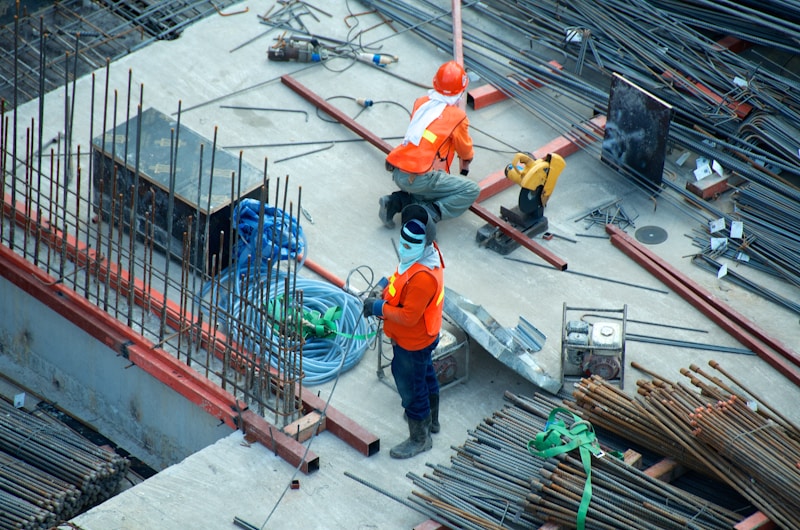
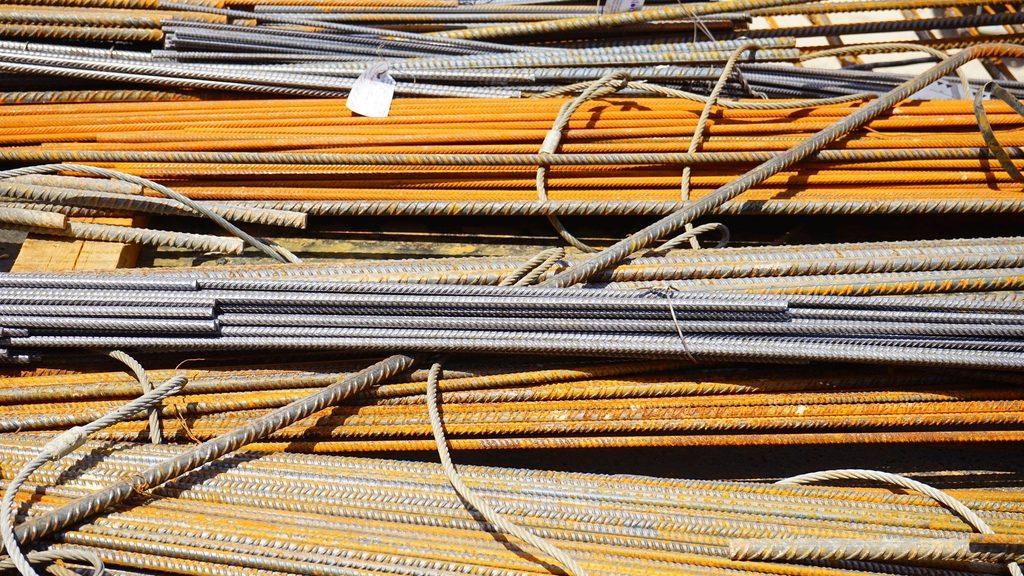
The most common and recommended septic tank construction in Nigeria. A reinforced concrete tank is built in-situ in an excavated pit. The walls, base slab, and cover slab are all reinforced concrete with bituminous or cementitious waterproofing applied to the inner surfaces. A well-built concrete septic tank will last 30 to 50+ years. This is the default in our calculator.
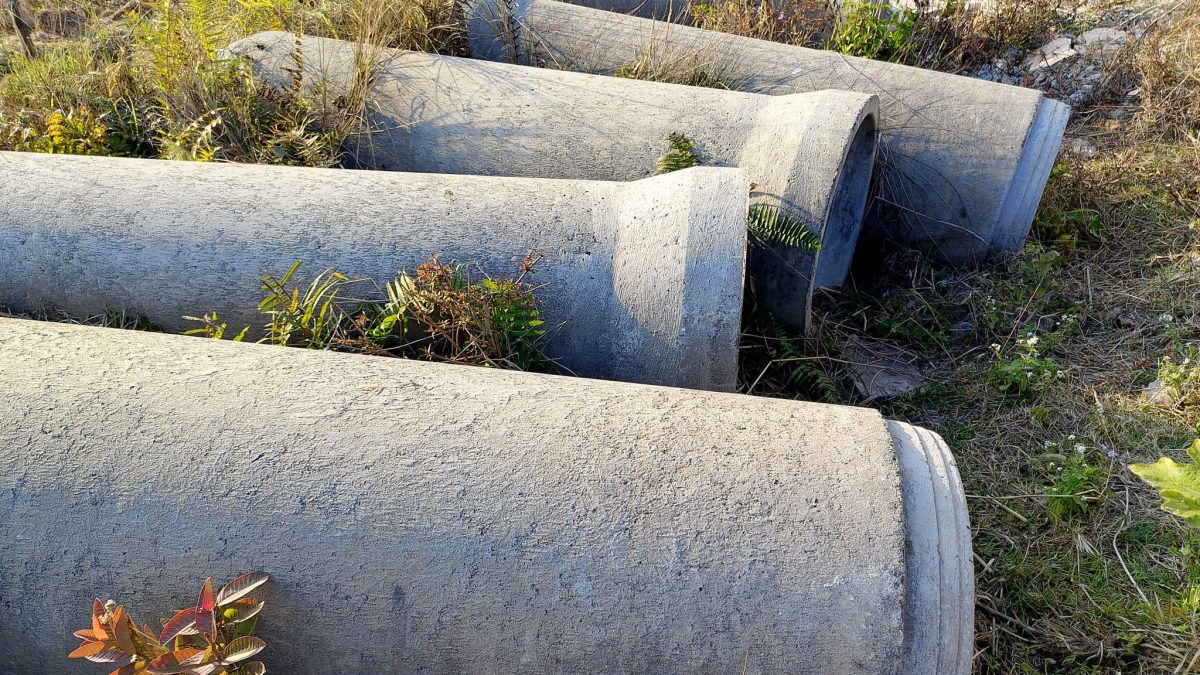
Precast Concrete Rings
Precast concrete rings (similar to manhole rings) stacked to form the tank walls. Cheaper and faster than cast-in-situ concrete but joints between rings can leak if not properly sealed. Suitable for smaller tanks up to about 3,000L.
Fiberglass/GRP Prefabricated Tanks
Factory-made GRP tanks delivered to site and lowered into the excavated pit. Available from specialty manufacturers in Nigeria. More watertight than concrete rings, relatively quick to install, but more expensive than cast-in-situ concrete and require careful installation to prevent buoyancy (uplift) in waterlogged ground.
Blockwork
Some Nigerian builders construct septic tanks from sandcrete blocks with render applied inside. This is the cheapest method but also the least reliable — block/render septic tanks frequently leak, are difficult to waterproof adequately, and should not be used in areas with shallow groundwater tables.
How to Use the Septic Tank Calculator
- Building type: Residential, office, school, restaurant, or mixed-use.
- Number of daily users: Regular building occupants or visitors.
- Desired desludging interval: 2 years, 3 years, or 5 years. Longer intervals require bigger tanks.
- Soil percolation: Fast draining (sandy soil), medium (loamy), slow (clayey) — affects soakaway area.
- Tank construction type: Cast-in-situ concrete, precast rings, or GRP.
- Region: For labour and material rates.
The calculator outputs: required tank volume in litres, recommended tank dimensions, soakaway area required, and itemised construction cost estimate.
Septic Tank Setback Distances in Nigeria
The following minimum setback distances should be observed:
- From any building: minimum 3m (ideally 6m+)
- From borehole or well: minimum 15m (30m recommended)
- From property boundary: minimum 1.5m
- From watercourse or drainage channel: minimum 15m
- From swimming pool: minimum 6m
On small urban plots (common in Lagos and other dense cities), achieving these setback distances can be very challenging. If setback cannot be achieved, alternative sewage disposal options (biodigester, packaged treatment plant) should be considered.
Frequently Asked Questions
How often should a Nigerian septic tank be desludged?
A correctly sized septic tank should be desludged every 3 to 5 years under normal residential use. Signs that desludging is overdue: slow draining fixtures, sewage odours in the building or garden, and soft, wet ground above the soakaway. Delaying desludging beyond the point of visible signs damages the system and risks serious contamination.
Can I connect my kitchen drainage to the septic tank?
Kitchen wastewater (including food waste and cooking grease) is typically connected to the septic tank in Nigerian practice. However, grease traps should be installed ahead of the tank for any property with significant cooking — a restaurant kitchen connected directly to a septic tank without a grease trap will fill the tank with grease within months.
Is a biodigester better than a septic tank in Nigeria?
Biodigesters (anaerobic digestion units) are increasingly popular in Nigeria for properties where there is insufficient space for a soakaway or where groundwater table makes conventional septic systems problematic. They produce effluent that can be discharged to a drain rather than a soakaway. Our calculator includes a biodigester option for comparison.
Size Your Septic Tank Now
Enter your occupants, building type and soil conditions. Get the correct tank size and 2026 construction cost estimate — free.
Open Septic Tank Calculator →