Scaffolding is one of the most commonly omitted or severely underestimated costs in Nigerian construction budgets. A contractor building a two-storey duplex will sometimes include a vague "scaffolding" allowance of ₦50,000 in a project costing ₦25 million — without calculating that proper access scaffold for a 200m² footprint duplex over a 12-week superstructure programme will actually cost ₦400,000 to ₦700,000 in hire, erection, and dismantling alone.
Our free Scaffolding Cost Calculator provides accurate, quantity-based scaffold estimates for Nigerian building projects, calibrated to current 2026 market rates.
Why Scaffolding Is Critical on Nigerian Building Sites
Access scaffolding performs several functions on a construction site beyond simply giving workers somewhere to stand:
- Safe working at height: Nigerian health and safety regulations require safe working platforms above 2m. Accidents from improvised bamboo scaffolding (still common on many Nigerian sites) are a major cause of construction fatalities.
- Material handling: Proper scaffold enables efficient material hoisting — blocks, mortar, concrete — to upper floors without the need for labour-intensive head-pan relays.
- Speed and quality: Workers with stable, safe platforms work faster and produce better quality masonry, plastering, and painting than workers balanced on makeshift perches.
- Guard rails: Edge protection prevents materials and tools falling onto workers or the public below.
Types of Scaffolding Used in Nigeria
Traditional Timber/Bamboo Scaffolding
Still the most common form on small Nigerian residential sites. Bamboo poles lashed together with rope form an improvised working platform. Very cheap in material terms but dangerous, slow to erect, structurally unreliable, and increasingly frowned upon by insurance companies and government inspectors. We do not recommend this approach and our calculator focuses on system scaffold.
Steel Tube and Coupler Scaffolding
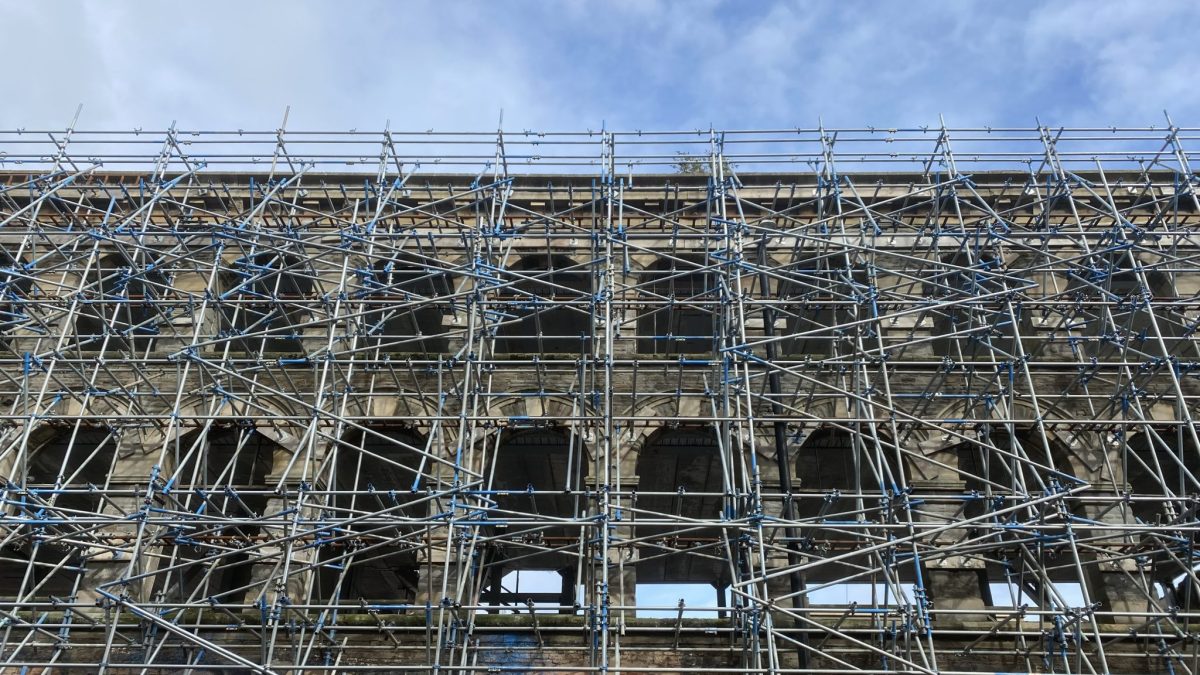
The standard scaffolding system in Nigeria for medium and large projects. Steel tubes (48.3mm diameter) connected with pressed-steel or cast-iron couplers form a highly versatile system that can be configured for any building geometry. Tube-and-coupler scaffold is hired from specialist contractors who deliver, erect, modify as required, and dismantle at project end.
Kwikstage / Modular System Scaffold
A faster-erecting system scaffold using prefabricated modular standards (uprights) with integral ledger connectors. Becoming more common in Nigeria among larger contractors for repetitive commercial and industrial projects. Slightly more expensive to hire than tube-and-coupler but significantly faster to erect and dismantle.
How Scaffolding Is Measured and Priced in Nigeria
Scaffolding is typically priced by scaffold contractors in one of three ways:
- Per lift (per floor level): A single lift of scaffold covers one storey height (approximately 3m to 3.5m). Each lift around the building perimeter is priced as a unit.
- Per square metre of scaffold face area: The total area of scaffold in the vertical plane (height × perimeter length) is measured and priced per m². This is the most common method for quotation and BOQ measurement.
- Lump sum hire per week: For smaller jobs, some Nigerian scaffold contractors quote a weekly hire rate for a specified scaffold configuration. This can be economical for short programmes but expensive if the project overruns.
Our calculator uses the scaffold face area method (height × perimeter) as the basis for quantity, and applies both a rate-per-m² for the hire period and a separate lump sum for erection and dismantling labour.
Typical Scaffolding Rates in Nigeria (2026)
- Steel tube-and-coupler scaffold hire: ₦800 – ₦1,500 per m² per month (depending on system and location)
- Erection labour: ₦500 – ₦900 per m² (one-off, includes materials handling)
- Dismantling and clearing: ₦250 – ₦450 per m²
- Modular (Kwikstage) hire premium: +15% to +25% over tube-and-coupler rates
- Mobilisation/delivery (Lagos or Abuja): ₦30,000 – ₦80,000 per mobilisation
How to Use the Scaffolding Cost Calculator
- Building perimeter: Total external perimeter of the building in metres. For a complex footprint, add up all external wall faces.
- Building height: Total height from ground to highest working level in metres.
- Programme duration: How many weeks will scaffold be required? This is typically the combined duration of blockwork, external plastering, and external painting.
- Scaffold type: Tube-and-coupler or modular system.
- Region: Lagos, Abuja, Port Harcourt, or general Nigeria.
The calculator outputs total scaffold face area in m², total hire cost, erection and dismantling cost, mobilisation allowance, and overall total.
Frequently Asked Questions
Do I need scaffold for a single-storey building in Nigeria?
For a standard single-storey building with a wall plate height of 3.0m to 3.5m, scaffold is needed for external wall plastering, painting, and fascia/soffit work. A single-lift scaffold (approximately 2m to 2.5m working height) covering the full perimeter is typically sufficient. The cost is lower than for multi-storey buildings but should still be budgeted.
Is bamboo scaffolding cheaper than steel in Nigeria?
Bamboo has lower direct material cost but requires experienced tiers (lagosians call them scaffold builders), is slower to erect safely, and represents a significant liability risk. When time value of money, accident liability, and programme overrun risk are included, proper steel scaffold almost always has lower true cost for any project above a single-storey bungalow.
When should scaffold be included in a Nigerian construction BOQ?
Scaffolding appears in Preliminaries (Temporary Works section) in a Nigerian BOQ. It should always be included for any building taller than one storey, and as a smaller item for single-storey buildings that require external finishing above 2m height.
Estimate Your Scaffolding Cost
Enter your building perimeter, height and programme weeks. Get hire, erection and total scaffold cost instantly — free.
Open Scaffolding Calculator →