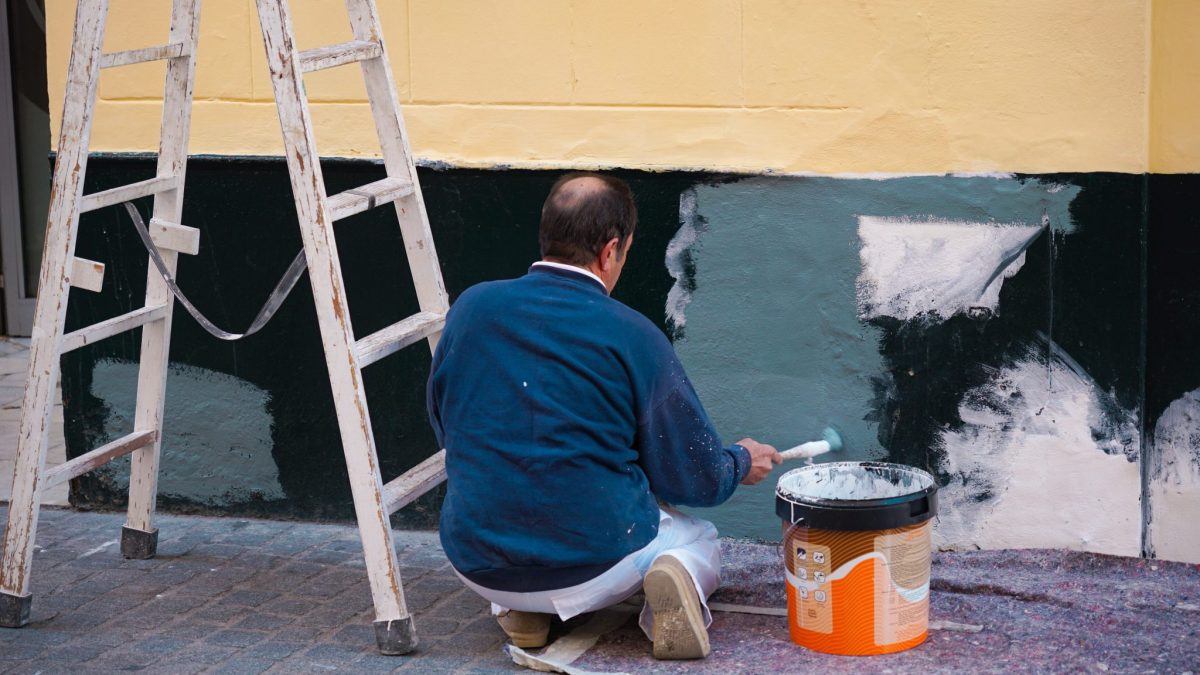
Painting looks like one of the simpler finishing trades to budget, but the actual cost per square metre varies substantially once paint grade, number of coats, surface preparation and whether the work is interior or exterior are all properly accounted for. This guide sets out 2026 Nigerian pricing across the range, using the pricing structure behind our free Painting Cost Calculator.
Paint Grade Prices, 2026
| Paint grade | Typical use | Relative cost per litre |
|---|---|---|
| Economy | Budget interior work, rental properties, low-visibility areas | Baseline |
| Standard | Most residential interior and exterior work | Moderate premium over economy |
| Premium | Feature walls, higher-end finishes, better washability and durability | Significant premium over standard |
Beyond the paint itself, primer (essential on new or previously unpainted surfaces for proper adhesion and coverage) and surface preparation (filling cracks, sanding, cleaning) are priced separately per square metre, and are not optional extras to skip on a tight budget — inadequate preparation is one of the most common causes of premature paint failure, discussed further below.
Interior vs Exterior Painting Labour
Exterior painting labour costs meaningfully more per square metre than interior painting — roughly 20–30% more, reflecting the additional demands of working outdoors: exposure to weather, the need for scaffolding or ladder access on upper storeys, and the more durable, weather-resistant paint systems typically specified for external surfaces. Interior painting labour is priced at a lower baseline rate, reflecting the more controlled, accessible working conditions of most interior spaces.
Coats: Why Two Is a Minimum, Not a Maximum
Two coats of paint over a properly primed surface is the standard minimum for adequate, even coverage and colour depth — a single coat, particularly over a primer or a different existing colour, often shows patchiness or the underlying surface bleeding through. Each additional coat beyond the standard two is priced separately, since it represents genuinely more material and labour time, and is sometimes needed for a dramatic colour change (very light over very dark, or vice versa) or where a premium, deeply saturated finish is desired.
Worked Example: A 4-Bedroom Duplex, Interior and Exterior
A 4-bedroom duplex with 380 m² of interior wall area and 210 m² of exterior wall area, standard grade paint throughout, two coats plus primer:
- Interior preparation (380 m² at a modest per-m² rate): ~₦190,000
- Interior primer (380 m²): ~₦114,000
- Interior paint material + labour (380 m², standard grade, 2 coats): ~₦912,000
- Exterior preparation (210 m²): ~₦105,000
- Exterior primer (210 m² with weather-grade primer): ~₦75,600
- Exterior paint material + labour (210 m², standard grade, 2 coats, +25% exterior labour uplift): ~₦693,000
- Scaffold hire for exterior work on the upper storey (allowance, ~2 weeks): ~₦180,000
Total: roughly ₦2,269,600 for a complete interior and exterior repaint of this duplex at standard grade. Upgrading to premium grade paint throughout would add a meaningful percentage to the material cost specifically, while preparation, primer and labour costs remain largely unchanged by paint grade choice alone.
Common Painting Costing Mistakes
- Skipping or underpricing surface preparation. This is the single most common source of premature paint failure — cracks, flaking and peeling within a year or two — and the modest cost of proper preparation is cheap insurance against a much more expensive repaint.
- Not accounting for a colour-change premium. A dramatic colour change, especially going from a dark to a light colour, often needs an extra coat or a specific undercoat to achieve even coverage — budget for this if a major colour change is planned.
- Forgetting scaffold cost for exterior upper-storey work. This is a real, separate cost from the painting labour itself and should be itemised explicitly, not assumed to be included.
- Comparing quotes without confirming paint grade and coat count. "Painting cost" alone tells you little without knowing exactly what grade of paint and how many coats are being quoted.
Choosing Paint Colours With Cost in Mind
Colour choice interacts with cost in ways that go beyond the paint tin's price tag. Very dark or highly saturated colours sometimes need an additional coat, or a specific tinted undercoat, to achieve full, even coverage over a lighter existing colour — a detail worth confirming with your painter before committing to a dramatic colour change, since discovering mid-job that an extra coat is needed can disrupt both budget and schedule. Very light colours applied over a dark existing colour face the same challenge in reverse, sometimes needing more coats to fully hide the darker base colour beneath.
White and off-white shades, while sometimes perceived as a "safe" or "cheap" default, do not carry a meaningful cost advantage over other standard colours within the same paint grade — cost is driven by paint grade and coat count, not colour choice itself, within a normal colour range. Custom-mixed or specialist colours (metallic finishes, unusual tints requiring extensive mixing) can carry a modest premium over standard, ready-mixed colours from a manufacturer's standard range, worth confirming if a very specific, non-standard shade is desired.
Frequently Asked Questions
How much does it cost to paint a standard Nigerian bungalow?
For a typical 3-bedroom bungalow's interior and exterior at standard grade, budget in the range of ₦1.2–1.8 million depending on wall area, condition, and whether significant preparation is needed. Use the calculator with your specific measurements for an accurate figure.
Is premium paint worth the extra cost?
Premium paints generally offer better washability, colour retention and durability, which can be worth the cost for high-traffic areas or feature spaces — for lower-visibility or budget-constrained areas, standard grade is usually a sensible, adequate choice.
How many years does a paint job typically last in Nigeria?
This varies with paint grade, preparation quality, and exposure — a well-prepared, standard-grade interior paint job commonly lasts 5–7 years before needing a refresh, while exterior paint exposed to weather may need attention sooner, particularly in coastal or high-humidity areas.
Does the calculator account for texture or effect finishes beyond flat paint?
Textured and specialist effect finishes are priced at a premium over standard flat paint given the additional material and application skill involved — confirm with your painter whether a specific desired effect (Venetian plaster, metallic accents, and similar) falls within their standard pricing or needs a bespoke quote.
Should ceiling painting be priced the same as wall painting?
Ceiling painting is sometimes priced at a modest premium over wall painting per square metre, reflecting the more physically awkward working position and the frequent need for a different, flatter sheen finish — confirm this is itemised separately if your quote combines wall and ceiling areas into a single blended figure.
Does the calculator distinguish between new construction and repaint pricing?
New construction painting typically needs a full primer coat on bare, previously unpainted surfaces, while a repaint over sound existing paint may need less preparation and can sometimes skip a full primer coat if the existing surface and colour are compatible with the new finish — confirm which scenario applies when getting a quote, since the two carry genuinely different material and labour requirements.
How much should I budget for paint on a typical Nigerian estate house exterior?
This depends heavily on the specific facade area, paint grade and whether scaffolding is needed for upper storeys, but using the per-square-metre figures in this guide against your building's actual measured exterior wall area, taken from the architectural drawings or a site measurement, gives a far more reliable figure than a generic estate-wide average.
Does painting cost typically include cleanup and waste disposal?
This should be confirmed explicitly — a thorough painting job generates some waste (empty tins, used masking material, leftover mixed paint) that needs proper disposal, and while this is usually a modest cost relative to the overall job, it is worth confirming it is included rather than assumed by default in a quoted price.
Is it more economical to paint the whole house at once or room by room?
Similar to the renovation phasing discussion elsewhere on this site, painting the whole house in one continuous project is generally more efficient than repeated smaller visits, since preparation, masking and labour mobilisation are spread across a larger area each time rather than repeated for every small job — though a phased approach remains reasonable where budget genuinely requires spreading the cost over time and disruption.
Does painting cost change much between rented accommodation and an owner-occupied home?
The underlying material and labour costs are the same, though a landlord preparing a rental unit between tenancies may reasonably choose a more durable, easy-to-maintain standard-grade finish over a premium option, prioritising longevity and ease of touch-up over the more personalised aesthetic choices an owner-occupier might make for their own home.
Price Your Painting Job
The free Painting Cost Calculator prices interior and exterior painting by paint grade, coats and scaffold needs. Working at height? Try the Scaffolding Calculator. Renovating more than just paint? The Renovation Calculator covers whole-room upgrades.
Open the Painting Cost Calculator →
