This week's quick take: cement moved in the right direction for the first time in months, the naira had its strongest stretch in almost two decades, and reinforcement steel quietly became the more painful line item on a lot of BOQs. None of these things happened for the same reason, which is exactly why it is worth pulling them apart rather than reading "construction costs" as one single number. Here is the roundup for the week of 6–12 September 2026.
1. Cement Eases to ₦12,000/Bag Across Dangote, BUA and HBM — Is the FCCPC Probe Working?
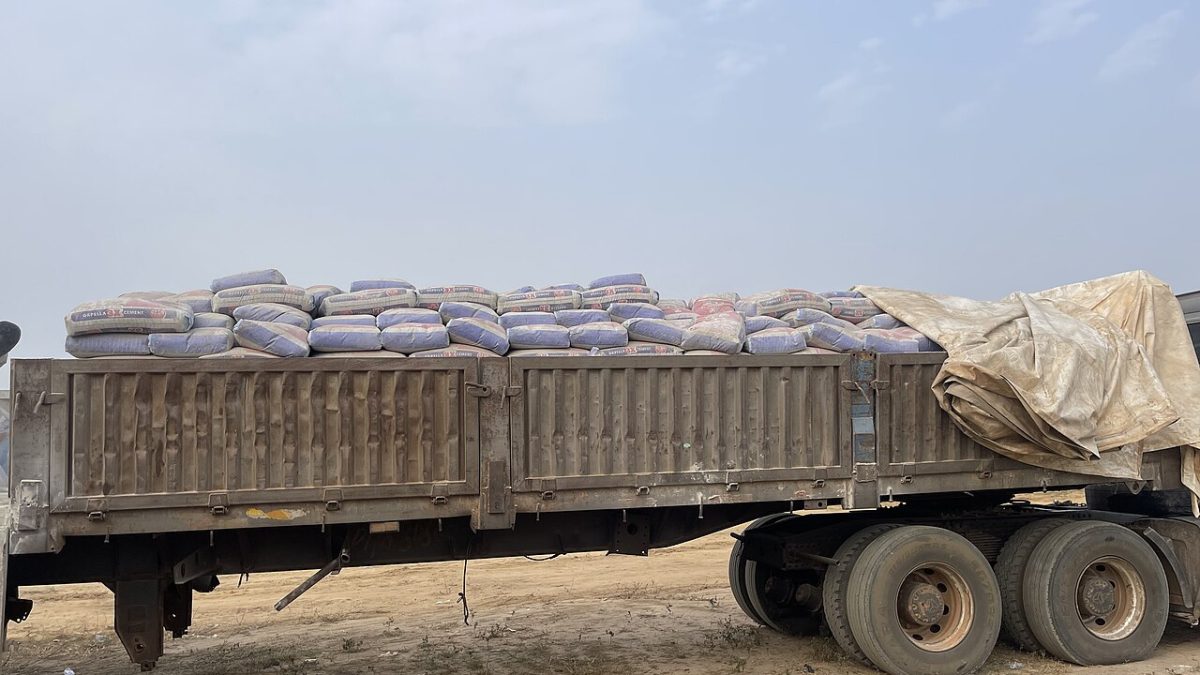
A 50kg bag of cement from Dangote, BUA, and HBM (formerly Lafarge) is now retailing at a converged ₦12,000, down from the ₦13,000–₦15,000 range widely reported through July and August (Legit.ng). It is not a collapse — retail prices as low as ₦9,500 and as high as ₦15,000 still exist depending on state, brand, and purchase volume — but it is the first genuine sign of downward movement in months, and it comes only weeks after the Federal Competition and Consumer Protection Commission (FCCPC) went public with findings from its three-month investigation into the industry.
The FCCPC's own numbers are worth sitting with: it estimates Nigeria's installed cement production capacity at 60–65 million tonnes a year against domestic consumption of only 25–30 million tonnes — roughly double the capacity the market actually needs (FCCPC). A market with that much spare capacity should, in theory, compete prices down, not let them triple in two years — which is precisely why the commission is investigating whether coordinated conduct, restricted supply, or abuse of market power (rather than legitimate cost pressure) explains the gap.
What this means for your budget: price your remaining cement needs at the current ₦12,000–₦13,000 band rather than the ₦15,000 peak from a few weeks ago, but don't bank on the moderation continuing — a regulatory-pressure-driven price dip can reverse the moment scrutiny eases, and high energy and haulage costs (the industry's stated justification) haven't gone anywhere. If your project timeline has flexibility, this is a reasonable window to lock in a bulk cement order rather than wait.
2. Naira Holds Firm as Reserves Hit an 18-Year High
Nigeria's external reserves reached $54.08 billion on 3 September — the highest level in nearly 18 years — after climbing from $45.56 billion at the start of the year, an increase of roughly 18.7% in just over eight months (Vanguard). CBN Governor Olayemi Cardoso attributed the sustained build-up to stronger foreign exchange inflows, including crude oil-related tax receipts and third-party inflows — and notably, the current position is already about $3 billion above the CBN's own end-of-2026 projection. The naira itself traded around ₦1,329/$1 officially on 11 September, with the parallel market running about 4.6% higher at roughly ₦1,390/$1 (Vanguard).
What this means for you: a currency this well-supported should, eventually, ease pressure on imported building inputs — sanitary ware, aluminium windows, electrical fittings, imported tiles. That cement (a domestically produced material) needed a regulatory probe rather than currency strength to move even slightly is the clearest evidence yet that Nigeria's construction cost problem right now is more about market structure than exchange rate, a distinction worth keeping in mind before assuming naira strength alone will fix your budget.
3. "Build With What Nigeria Has" — Experts Renew the Case Against Imported Materials
Stakeholders across the built environment used the week to renew a familiar but increasingly urgent argument: that Nigeria's housing crisis — a deficit widely put at 22–28 million units — is worsened by how much of what goes into a typical building still has to be imported (Nigeria Housing Market). The country has real, underused deposits of clay, laterite, stone, lime, timber, and glass, but weak energy supply, financing, and industrial capacity keep local manufacturers from producing these at the scale that would actually dent import dependence.
What this means for your project: this is a slow, structural story, not a this-week fix — but it's a good prompt to ask, at the design stage, which parts of your own build genuinely need imported material and which don't. Boundary walls, non-load-bearing partitions, and outbuildings are usually the most forgiving places to substitute a local alternative (compressed stabilised earth block, laterite block, or fired clay brick) without touching your building's structural design. Getting this right starts at the drawing stage, not after materials are already on site — sketch your layout in the free Floor Plan Editor before committing to a materials list, so you know exactly which walls are structural and which are candidates for a cheaper local alternative.
4. The Quieter Story: Iron Rod Prices More Than Doubled in a Year
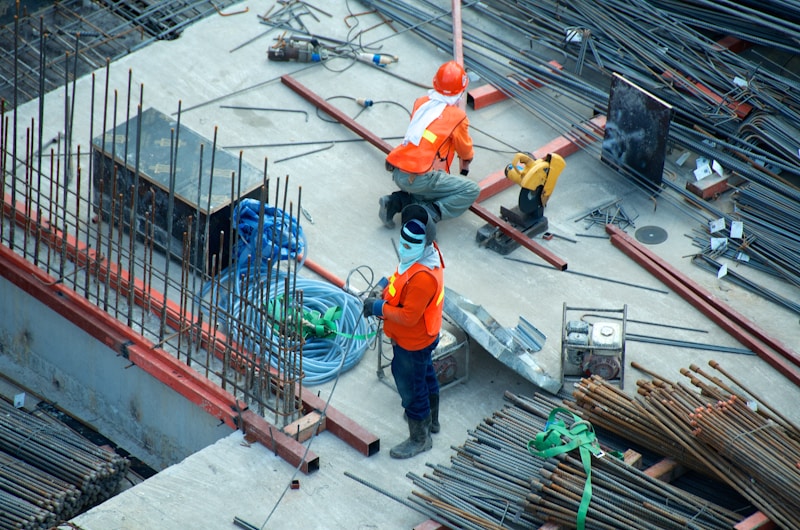
While cement dominates the headlines, reinforcement steel has moved even further, even faster: the price of a 12mm iron rod has jumped from around ₦8,000 to as much as ₦19,000 within a year — a rise of well over 100% — and steel door prices have surged by up to 290% over a similar period (Nigeria Housing Market). Unlike cement, steel reinforcement has no comparable non-negotiable substitute for structural work — a foundation or a suspended slab needs the rebar it needs, and there is no laterite-block equivalent to fall back on.
What this means for your budget: if your rebar quantities were priced against last year's rates, they are very likely stale — this is the single line item most worth re-pricing before you finalise a BOQ this month. Our Professional Estimator and BOQ Tender tools carry current 2026 rates for reinforcement across major cities, so a re-run takes minutes rather than a fresh round of supplier calls.
What This Means for Your Project This Month
Put the four stories together and a pattern emerges: cement is (tentatively) easing under regulatory pressure, the naira is strong enough that imported finishes should get somewhat cheaper over time, but structural steel is the cost center quietly doing the most damage to budgets right now, and the underlying "why are we importing this at all" question isn't going away. Two practical takeaways follow. First, re-price reinforcement steel specifically before you finalise any BOQ drawn up more than a couple of months ago — it has moved the most and gets the least attention relative to cement. Second, get your design right before you price it: our Estimator now also flags when a stated plot is unusually large relative to the building on it, since perimeter fencing is priced off raw land dimensions, not the building's footprint — a genuinely large compound is fine, but a mistyped land size can silently inflate an External Works line by millions. Catching that kind of thing at the design stage, in the free Floor Plan Editor, is a lot cheaper than catching it after a quote lands.
Frequently Asked Questions
Why did cement prices drop this week when they had been rising all year?
The moderation follows closely on the heels of the FCCPC's public findings on possible price manipulation in the cement industry, released in August after a three-month investigation. It is reasonable to read the two as connected, though neither the commission nor the cement companies have explicitly tied the price move to the investigation.
Is now a good time to lock in a cement order?
If your project timeline allows it, yes — ₦12,000/bag is meaningfully below the ₦15,000 peak from a few weeks ago, and a regulatory-driven dip is not guaranteed to hold once scrutiny fades. It is not, however, guaranteed to be the floor either; treat it as a reasonable window, not a permanent new price.
Should I worry more about cement or steel right now?
Based on this week's numbers, steel deserves the closer look. Cement has moved roughly 15–20% off its recent peak; 12mm iron rod has more than doubled in a year with no sign of the same regulatory attention cement is now getting.
How can I reduce fencing/external works costs on a large plot?
Perimeter fencing is priced by land perimeter, not building size, so the honest answer is usually to double-check your stated land dimensions are correct before assuming the number is wrong — a surprisingly common source of an inflated External Works estimate is simply a mistyped land length or width. Our Estimator now flags this automatically when a plot looks unusually large relative to the building on it.
Plan the Building Before You Price It
Sketch your layout in the free Floor Plan Editor, then send the real room sizes into the Professional Estimator for a full itemised cost breakdown using this week's material rates — now covering 11 major cities, from Lagos and Abuja to Kano, Onitsha, and Warri. Add a BOQ Tender to compare contractor bids on the same terms.
Start Your Free Estimate →