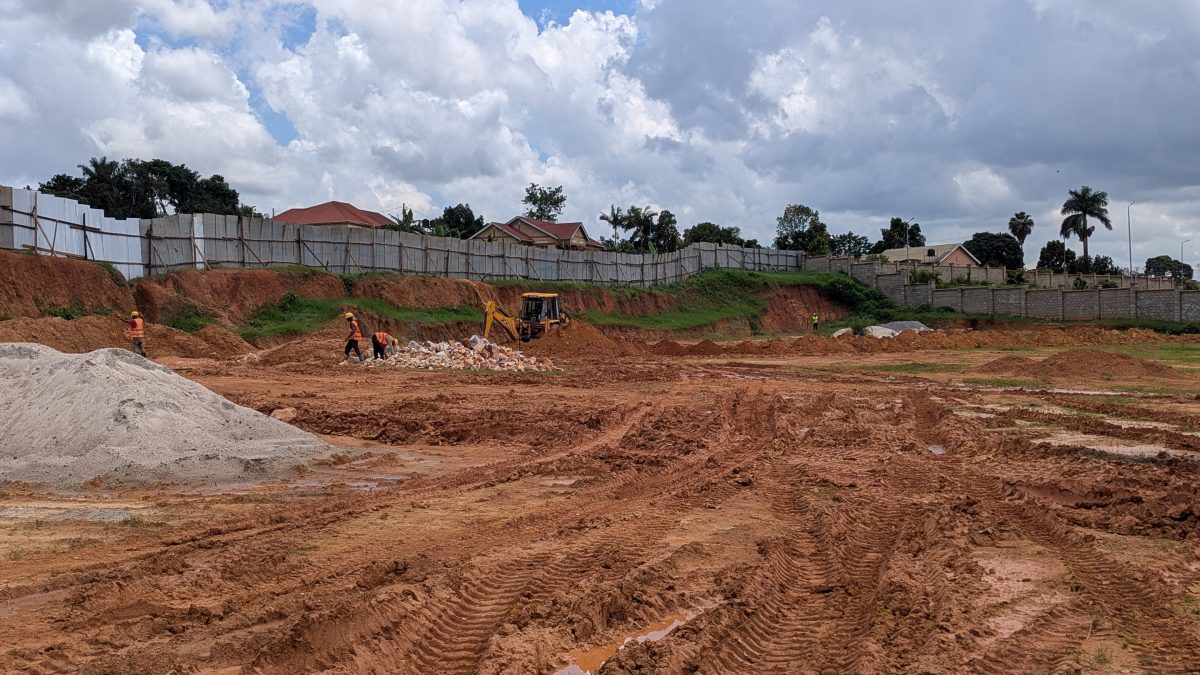
Across Lagos, Abuja and Port Harcourt, a lot of new flats are going up on land the developer doesn't own. The landowner has a good plot but not the ₦200–300 million it takes to build a block of flats. The developer has the money and the know-how but not the land. So they agree to build together and share what they build. This is a joint venture (JV), and done properly it can work very well for both sides.
Pitch your development to a landowner or investor
Build a development proposal with costs, sales values and returns, ready to share. Free to try.
Make a development proposal →Done badly, it ends with a half-built frame, a developer who has sold "his" flats off-plan twice over, and a landowner who can't get the land back. This guide explains how Nigerian landowner–developer JVs are usually set up, how the sharing ratio is worked out, and the clauses that keep everyone honest.
How a Landowner–Developer JV Works
- The landowner contributes the land with a clean title, free of disputes and charges.
- The developer pays for design, approvals, construction and services, and manages the project to completion.
- When the building is finished, the two share it, usually by allocating specific units to each party, sometimes by selling everything and splitting the proceeds.
A third variation is a long lease: the landowner leases the land to the developer for a long term in return for units or payments. Whichever model you choose, the landowner usually keeps the title until units are sold, and gives the developer only the rights they need to build and sell their share.
How the Sharing Ratio Is Worked Out
There is no standard ratio. Listings and advisers mention 50:50, 60:40 and 55:45 splits. The fairest starting point is to compare what each side puts in:
| Party | Contributes | Value (example) | Share |
|---|---|---|---|
| Landowner | 2 plots in Ajao Estate, Lagos, clean title | ₦60 million | 20% |
| Developer | Design, approvals, construction of 6 × 3-bedroom flats | ₦240 million | 80% |
| Total | ₦300 million | 100% |
On value alone, the landowner would get 20%, a little over one flat in six. In practice landowners usually negotiate more, for three reasons:
- the developer's profit comes from selling flats at more than they cost to build;
- the landowner carries the risk of a stalled project on their land;
- good land in a strong location is scarce, and the developer needs it.
So a ratio of 2 flats out of 6 (33%) or 40% to the landowner is common for good locations. Whatever you agree, write down exactly which units each side gets (floor, position and size), not just a percentage. Ground-floor and corner flats sell differently. Our template has a unit-by-unit table for this.
To estimate the developer's side, price the building with our Building Cost Estimator (choose Block of Flats). To check land values, see Land & Build Prices.
The Clauses That Protect Each Side
For the landowner
- A start date and a completion date, with a long-stop date. If the developer hasn't finished by then, the landowner can give notice and take back the site, paying only for work valued by an independent quantity surveyor.
- No mortgage on the land. The developer may raise finance on their own share, not by pledging your title.
- A limited power of attorney. Give the developer only the powers needed to get approvals and sell their own units, never a general power over your land.
- No off-plan sales before a stage (for example, frame complete), so buyers' money isn't collected for a building that may never rise.
- Indemnity against claims from workers, suppliers, neighbours and buyers of the developer's units.
For the developer
- Clean title, warranted. The landowner confirms there is no family claim, charge or government acquisition, and must fix any defect at their cost.
- Licence to enter and build for the life of the project.
- Co-operation with sales: the landowner signs deeds of assignment or sub-leases to buyers of the developer's units.
- Fair handling of delays caused by approvals, the landowner, or force majeure.
For both
- Monthly progress records: photos and a QS valuation, so nobody argues about how far the project has gone. A tool like Track My Build makes this easy to share.
- Who pays which taxes on their share.
- Dispute resolution: mediation first, then arbitration under the Arbitration and Mediation Act 2023, rather than years in court.
Common Problems
- A percentage but no unit list. Leads to fights at the end over who gets the best flats.
- No deadline. Some sites stay at "foundation level" for years with no remedy.
- A general power of attorney. Developers have mortgaged or sold whole sites on the strength of one.
- Weak developer checks. Before signing, check the developer's CAC record and visit projects they've completed.
- Title problems discovered late. Search the title before signing, not after excavation starts.
Free Template
Our Joint Venture Development Agreement template is pre-filled for a block of six flats in Lagos. It has a contributions table that works out each side's share, a unit-by-unit sharing table, and the key terms above. It's a starting point to discuss with your lawyer, not legal advice. Have the land title searched and the agreement reviewed before anyone signs.
If you're the developer approaching an investor or a bank, our Proposals tool builds a development proposal with costs, sales values and returns.
A Worked Example: Six Flats on Two Plots
Here is how a typical JV might run from signing to sharing, using the example in our template:
| Stage | Timing | Who does what |
|---|---|---|
| Title search, developer checks, agreement signed | Month 0 | Both, with their lawyers |
| Design and building approval | Months 1–4 | Developer pays; landowner signs application forms |
| Construction starts (deadline: 3 months after approval) | Month 5 | Developer |
| Frame complete: developer may start selling their 4 flats off-plan | Around month 12 | Developer; landowner signs sale documents for those flats only |
| Completion (deadline: 24 months from start) | Around month 29 | Developer hands over the landowner's 2 flats |
| Long-stop date (30 months): landowner may take over | If needed | Independent QS values work done |
The point of the table is that every stage has a date and a person. Agreements that say only "the developer shall build within a reasonable time" give the landowner nothing to enforce.
Questions to Ask a Developer Before Signing
- Which projects have you completed? Can I visit two and speak to the buyers?
- How will you fund construction: your own money, buyers' deposits, or a loan?
- Who is your structural engineer and your site supervisor?
- What happens to my flats if you run out of money halfway?
- Will you give monthly progress photos and a QS valuation?
- Which flats exactly will I get, and to what finish (tiles, doors, kitchen, ceiling)?
Write the finish into the agreement as well. "Two flats" means little if yours get plain cement floors while the developer's get porcelain tiles.
Frequently Asked Questions
Does the landowner lose the land in a JV?
Not if the agreement is drafted well. The landowner normally keeps the title and gives the developer only a licence to build and the right to sell their own units. Buyers of the developer's units then receive a deed of assignment or sub-lease for their unit.
Who pays for the building approval?
Usually the developer, as part of their contribution. The landowner signs the forms because the application is made on their title.
Can the landowner take cash instead of flats?
Yes. Some JVs pay the landowner an agreed share of sale proceeds, or an upfront premium plus fewer units. Whatever the mix, write down the amount, the date and what happens if it's late.
Is a JV agreement the same as a power of attorney?
No. The JV agreement sets out the whole deal. A power of attorney is a separate document that lets the developer act for the landowner in specific matters. Keep it limited to approvals and the developer's own units.
Download the JV Agreement Template
Free, editable Excel and PDF Joint Venture Development Agreement, pre-filled for a block of 6 flats, with a contributions table and unit-by-unit sharing.
Get the JV template →