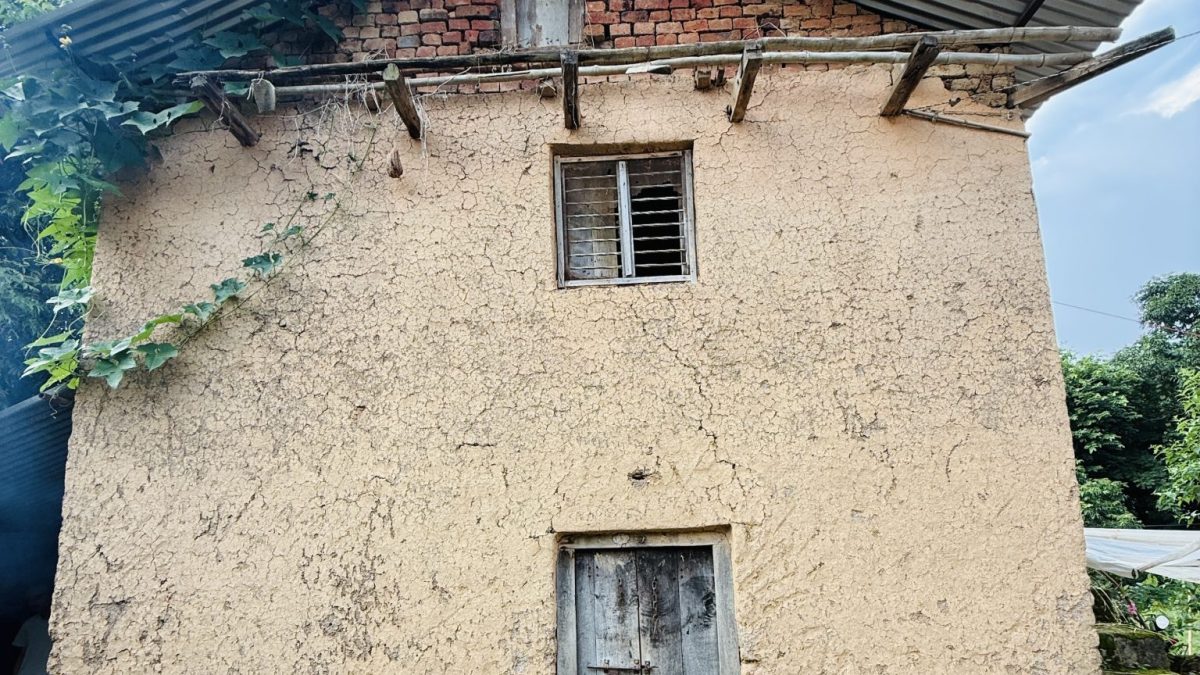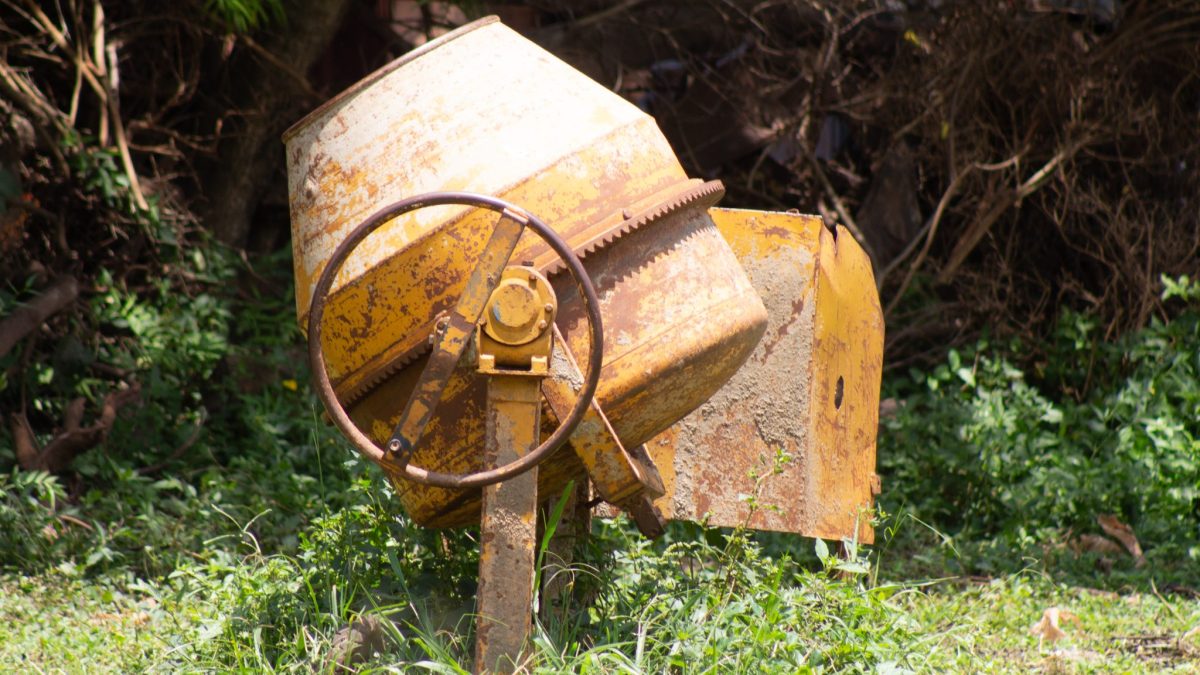
A contractor's quote can look thorough — cement quantities, block counts, labour day-rates all itemised — and still be silently missing an entire category: the equipment needed to physically carry out the work. This is not usually deliberate deception; it is more often an assumption on the contractor's side about what "obviously" gets absorbed into their overhead versus what the client is expected to cover. The problem is that assumption is rarely stated out loud.
What Commonly Goes Unquoted
Scaffolding hire is the biggest one. External wall work, plastering, and roofing all need it, and hire costs (around ₦27,000 for the period needed) sometimes get absorbed into a contractor's general markup rather than appearing as their own line — which is fine as long as it is genuinely covered, and a problem if it is not covered by either side.
Water for construction is another. Curing concrete, mixing mortar, and general site use requires real water volume — priced by the tanker load, not by the litre — and it is easy for this to be assumed as "the client's responsibility" without ever being said explicitly, leaving you to discover it when a tanker shows up expecting payment.
Power tools for a specific job — a hammer drill for masonry anchors, an angle grinder for cutting — sometimes get treated as "the contractor's own equipment, no charge," and sometimes get quietly billed as a rental line. Both are reasonable; the ambiguity is the actual problem.
General site consumables — nails, binding wire, buckets, head pans — are individually cheap enough that a contractor may simply not bother itemising them, bundling the cost into labour rates instead. That is fine in principle, but it means the labour rate you are comparing across contractors is not actually apples-to-apples if one bundles consumables and another does not.
Why This Matters for Comparing Quotes
Two contractors quoting the "same" job can differ by a meaningful amount purely because of what is bundled versus itemised separately — not because one is more expensive at the actual work. Comparing bottom-line totals without understanding what is and is not included is how people end up surprised by add-on costs after signing.
How to Ask the Right Question
Rather than asking "is everything included?" — which invites a reflexive "yes" — ask specifically: "Does this quote include scaffolding hire, construction water, and general site consumables like nails and binding wire, or are those separate?" A specific question gets a specific, checkable answer. A general one gets a reassurance that may not survive contact with the actual invoice three weeks into the build.
Put It in Writing
Whatever the answer, get it into your signed agreement or Quotation explicitly — "scaffolding hire included" or "scaffolding hire billed separately, estimated ₦X" — rather than relying on a verbal assurance. This is precisely the kind of ambiguity that turns into a dispute mid-project, when leverage has shifted entirely toward whoever is already on site holding your unfinished building.
The Takeaway
An itemised BOQ is your best protection here — not because contractors are typically dishonest, but because an itemised list makes gaps visible before they become disputes. If a category like site equipment or consumables has no line at all, that is the question to ask before you sign, not after.
Why This Happens Even With Experienced Contractors
It is worth saying plainly: most cases of unquoted equipment costs are not deliberate underquoting to win a bid cheaply and add costs later. They more often come from a contractor genuinely assuming certain things are "obviously" included in their day rate or "obviously" the client's responsibility, based on how they have always worked with other clients — an assumption that goes unstated because it has simply never been questioned before. The fix is the same regardless of intent: get the assumption stated explicitly rather than left implicit.
A Simple Pre-Contract Checklist
Before signing any contractor agreement, run through this list explicitly and get written answers: Is scaffolding hire included or separate? Who supplies and pays for construction water? Are power tools the contractor's own, or billed as equipment rental? Are general consumables (nails, binding wire, buckets) itemised or bundled into labour rates? Is site cleanup and waste removal included? None of these questions is unusual or adversarial to ask — a professional contractor should have ready answers, and hesitation or vagueness on straightforward questions like these is itself useful information.
How This Affects Comparing Multiple Quotes
When getting quotes from several contractors for the same project, request that each one explicitly states what is bundled versus separate for the categories above. Without this, the lowest headline number is not necessarily the cheapest actual project cost — it may simply be the quote that excluded the most, leaving you to absorb those costs later. Ask each contractor for a like-for-like itemised comparison rather than comparing bottom-line totals in isolation.
What to Do If a Gap Surfaces Mid-Project
If you discover partway through a build that something you assumed was included is not, address it immediately and in writing rather than letting it slide informally — an informal, undocumented resolution mid-project tends to resurface as a dispute at final payment, when both sides remember the conversation differently. A short written addendum confirming who now covers the gap protects both you and the contractor from exactly this kind of memory-dependent disagreement later.
The Psychology Behind Why This Keeps Happening
Contractors who have worked with many clients over the years develop a mental default for "how things usually go," and that default becomes the unstated basis for their quote unless a specific client asks otherwise. From the client side, most people building for the first time have no equivalent experience to know which questions to even ask. This asymmetry — one side operating on unstated assumptions built from experience, the other with no frame of reference to challenge them — is the actual root cause of most hidden-cost surprises, far more often than deliberate omission.
Using a Written BOQ to Force the Conversation
The most reliable fix is procedural rather than relational: insist on a genuinely itemised BOQ rather than a summary quote, and read through every section actively looking for what is absent, not just what is present. An itemised document makes silence visible in a way a verbal assurance or a one-page summary quote never does — if scaffolding, water, or consumables simply do not appear anywhere in the document, that gap is now something you can point to and ask about specifically, rather than a vague unease you cannot quite articulate.
Second Opinions Are Worth the Modest Cost
For a significant project, having an independent quantity surveyor or experienced builder review a contractor's quote before you sign — even for a modest fee — is a reasonable investment specifically for catching exactly this kind of gap. Someone with direct industry experience will recognise an absent line item far faster than a first-time client reading the same document, and the fee is typically small relative to the cost of an unresolved gap discovered mid-build.
The Bigger Picture
None of this is about assuming bad faith from contractors — most gaps genuinely come from unstated convention rather than deception. But "usually not deception" is not the same as "never costly," and the practical fix — insist on itemisation, ask specific rather than general questions, get answers in writing — protects you regardless of which explanation applies to your specific contractor.
Get an Itemised Quote, Not a Guess
Use our free BOQ Tender tool to see every line item a contractor should be quoting, site equipment included.
Build a BOQ →