Why Your Roof Choice Is One of the Most Important Decisions in Your Build
Your roof is the first line of defence against Nigeria's heavy tropical rains, blazing sun, and the occasional violent storm. A poor roof choice — whether from underspending on quality or poor installation — leads to leaks, internal damage, and costly repairs that far exceed what a better choice would have cost. Conversely, the right roof, properly installed, protects your investment for 30–50 years with minimal maintenance.
Roofing typically accounts for 12–20% of total building cost. For a standard 3-bedroom bungalow, that means ₦2M–₦7M depending on your choices. This guide gives you everything you need to make the right decision for your climate zone, budget, and long-term plans.
Quick answer: The cost of roofing a house in Nigeria ranges from ₦900,000 for a small 2-bedroom bungalow with basic long span aluminium, to ₦8.5 million or more for a large duplex with premium clay or stone-coated tiles. For a standard 3-bedroom bungalow, expect to budget ₦1.2M–₦5.5M depending on the material you choose. This figure includes roofing sheets, trusses/purlins, ridge capping, and installation labour.
Understanding Roof Area and Pitch
Before pricing your roof, you need to understand roof area vs. floor plan area. Due to roof pitch (slope) and overhangs, the actual roof sheeting area is always larger than the floor plan. For typical Nigerian residential roofs:
- A 30° pitch roof area is approximately 1.15 × floor plan area
- A 45° pitch roof area is approximately 1.41 × floor plan area
- A hipped roof on a rectangular building adds 20–30% more valley and hip intersections
A 3-bedroom bungalow with a 100 sqm floor plan at 30° pitch has approximately 115–130 sqm of roof sheeting area, plus overhangs. Always calculate roof area accurately before pricing materials.
Option 1: Long Span Aluminium Roofing
Long span aluminium remains Nigeria's most popular roofing material. It is lightweight, easy to install, widely available, and the most affordable option for large areas. The key variable is gauge (thickness) — never accept 0.40mm or below for a permanent residential building. Always use 0.55mm gauge minimum.
| Gauge | Price per Bundle (10 sheets, 3.6m) | Coverage per Bundle | Recommended Use |
|---|---|---|---|
| 0.40mm (budget) | ₦30,000 – ₦38,000 | ~18 sqm | Temporary / low-cost rental |
| 0.45mm | ₦38,000 – ₦46,000 | ~18 sqm | Low-cost residential |
| 0.55mm (standard) | ₦46,000 – ₦58,000 | ~18 sqm | Standard residential |
| 0.65mm (premium) | ₦60,000 – ₦75,000 | ~18 sqm | High-quality residential |
Pros: Lowest upfront cost; lightest weight (reduces structural load); fastest installation; widely available nationwide.
Cons: Extremely noisy during rain (a significant quality-of-life issue in Nigeria's tropical climate); can dent from hail or falling debris; lower aesthetic value; lifespan of 15–25 years depending on gauge and environment.
Option 2: Stone-Coated Steel Roof Tiles
Stone-coated steel roof tiles have grown rapidly in popularity across Nigeria's middle and upper-income housing market. They consist of a galvanised steel base with a coloured stone chip coating — providing excellent durability, noise reduction, and aesthetics.
| Brand / Type | Price per Carton (10 tiles) | Coverage | Lifespan |
|---|---|---|---|
| Gerard (premium) | ₦28,000 – ₦38,000 | ~3.1 sqm | 50+ years |
| Metstone (mid-range) | ₦22,000 – ₦30,000 | ~3.1 sqm | 40–50 years |
| Local stone-coat brands | ₦16,000 – ₦22,000 | ~3.1 sqm | 20–35 years |
Pros: Excellent aesthetics; very quiet in rain; 40–50 year lifespan; adds resale value; available in many colours and profiles.
Cons: Significantly higher upfront cost than long span; requires more careful installation (specialist fixers recommended); heavier than aluminium (structural design must account for this).
Option 3: Concrete and Clay Roof Tiles
Concrete and clay tiles are the traditional premium roofing option — extremely durable, fire-resistant, and thermally effective. They are significantly heavier than metal roofing and require a properly designed roof structure capable of carrying the additional load.
- Concrete interlocking tiles: ₦5,500–₦9,000 per sqm installed
- Clay tiles: ₦7,000–₦14,000 per sqm installed
- Lifespan: 50–100 years with minimal maintenance
Important: If switching from a design that assumed metal roofing to concrete/clay tiles, your structural engineer must review and upsize the roof trusses and potentially the ring beam and columns.
Roof Trusses and Structural Framework
The roofing material cost is only part of the total roofing budget. The structural framework — trusses, rafters, purlins, and ridge board — often costs as much as the sheeting itself.
| Framework Type | Cost (3-Bed Bungalow, ~130 sqm roof) |
|---|---|
| Timber trusses (hardwood) | ₦600,000 – ₦1,400,000 |
| Timber trusses (softwood) | ₦450,000 – ₦950,000 |
| Light gauge steel trusses | ₦900,000 – ₦1,800,000 |
| Heavy steel frame (for large spans) | ₦1,500,000 – ₦4,000,000 |
Total Roofing Cost by House Size (2026)
| House Type | Long Span (0.55mm) | Stone-Coated (mid-range) | Clay Tiles |
|---|---|---|---|
| 2-Bed Bungalow | ₦900K – ₦1.4M | ₦1.8M – ₦2.8M | ₦2.5M – ₦3.8M |
| 3-Bed Bungalow | ₦1.2M – ₦1.8M | ₦2.4M – ₦3.8M | ₦3.5M – ₦5.5M |
| 4-Bed Duplex | ₦1.8M – ₦2.8M | ₦3.5M – ₦5.5M | ₦5.5M – ₦8.5M |
All figures above include materials, trusses/purlins, ridge capping, fascia boards, and installation labour.
Roofing Installation Tips
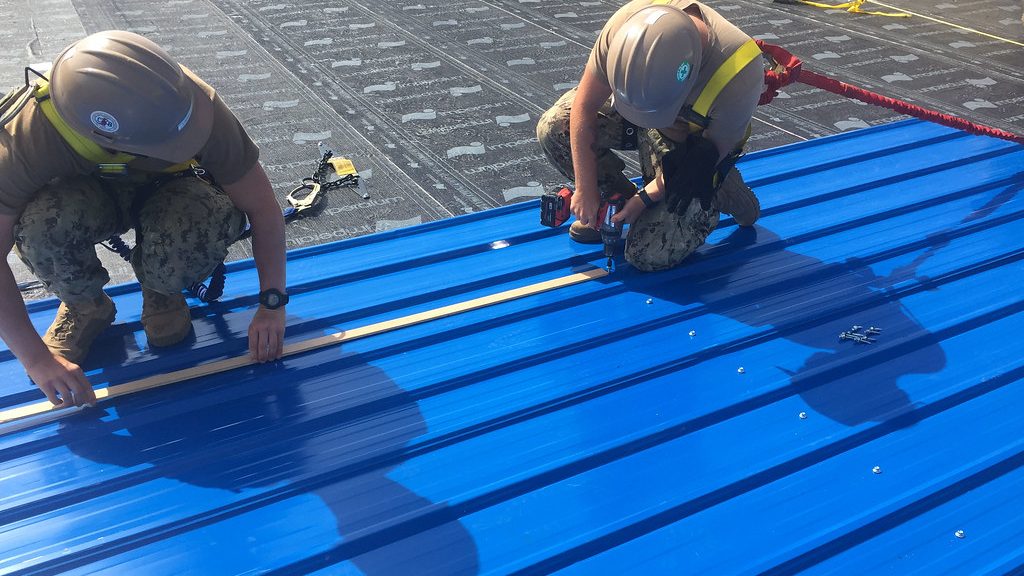
- Always use authorised installers for stone-coated tiles — improper installation voids the manufacturer warranty
- Ensure all ridge caps and hip caps are securely fixed — these are the most common source of roof leaks
- Install proper roof insulation (aluminium foil or sarking felt) under any metal roof to reduce heat gain by 30–40%
- Check that all penetrations (pipes, vents, antennas) are properly flashed with lead or aluminium flashing
- In areas with strong winds, ensure the roof-to-wall connection is properly anchored with hurricane straps
Are You Ready to Estimate Your Building Cost in Nigeria?
Stop guessing and start building with confidence. Our free Nigeria Building Cost Estimator generates an accurate, itemised Bill of Quantities in minutes — tailored to your location, house type, and finish level.
Start Your Free Estimate →