Why the Foundation Is Your Most Important Building Decision
The foundation is the only element of your building that you will never see once construction is complete — yet it is the element that everything else depends on entirely. A poorly designed or built foundation causes progressive structural damage that worsens over time and is virtually impossible to fix without demolishing and rebuilding. In contrast, a well-designed foundation on appropriate ground conditions requires zero maintenance for the life of the building.
Nigeria's geological and soil conditions vary enormously — from the hard, stable laterite of the Abuja Plateau to the soft, waterlogged clays of the Lagos coastal strip, the expansive clay soils of parts of the North, and the deltaic alluvial deposits of the Niger Delta region. Each condition demands a different foundation solution, and the cost difference between a simple strip foundation and a full piled raft can be ₦5–₦15 million on a standard residential plot.
The Foundation Design Process
The correct foundation design sequence is:
- Commission a soil investigation report: A geotechnical engineer takes borehole or trial pit samples, analyses soil bearing capacity and settlement characteristics, and recommends the appropriate foundation type. Cost: ₦80,000–₦300,000. This is not optional for any project above a simple outhouse.
- Structural engineer designs the foundation: Based on the soil report and the building loads (taken from the architectural and structural drawings), the structural engineer sizes the foundation and specifies the reinforcement and concrete grade. This service is included in the engineer's full-project fee.
- Foundation is constructed to specification: Any deviation from the engineer's specification — shallower depth, weaker concrete, omitted reinforcement — is extremely dangerous and legally the builder's liability.
Type 1: Strip Foundation
The strip foundation is a continuous reinforced concrete beam running under all load-bearing walls. It is the standard foundation for residential buildings on firm, good-quality soil.
When to use: Firm lateritic soil, stiff clay, or rock with a bearing capacity of at least 100 kN/sqm. Suitable for single-storey buildings and most two-storey duplexes on adequate ground.
Design: Typically 500–900mm wide, 300–450mm deep in concrete, with 2–4 longitudinal bars and links at appropriate spacing. Set on a blinding layer of 75mm lean concrete (1:3:6 mix) on compacted fill.
| Building Type | Typical Strip Foundation Cost |
|---|---|
| 2-bedroom bungalow | ₦800K – ₦1.5M |
| 3-bedroom bungalow | ₦1.2M – ₦2.5M |
| 4-bedroom bungalow | ₦1.8M – ₦3.2M |
| 4-bedroom duplex | ₦2.5M – ₦4.5M |
Type 2: Pad (Isolated Column) Foundation
Used for framed structures where loads are concentrated at column positions rather than distributed along walls. Common for multi-storey buildings.
When to use: Column-and-beam structural frame buildings; good to medium-quality soil.
Cost for residential 4-bedroom duplex: ₦2M – ₦5M depending on pad size and depth.
Type 3: Raft Foundation
A raft foundation is a reinforced concrete slab covering the entire building footprint. It distributes building loads over the full plan area, making it ideal for weak or variable soils where a strip or pad foundation would cause differential settlement.
When to use: Soft clay, sandy or silty soils, made-up ground, areas with significant fill material, and any location where the soil bearing capacity is below 75 kN/sqm. Mandatory in most of Lagos Island, many parts of Lagos Mainland near the lagoon, and throughout the Niger Delta region.
Design: Typically 200–350mm thick reinforced concrete slab, heavily reinforced top and bottom, with ground beams under all wall lines for stiffness.
| Building Type | Typical Raft Foundation Cost |
|---|---|
| 3-bedroom bungalow | ₦2.5M – ₦5.5M |
| 4-bedroom bungalow | ₦3.5M – ₦6.5M |
| 4-bedroom duplex | ₦5M – ₦9.5M |
Type 4: Pile Foundation
Pile foundations transfer building loads through weak surface soils down to a firmer stratum at depth. They are used when the top 3–10 metres of soil are too weak to support a conventional spread foundation.
When to use: Swampy, waterlogged, or very soft ground; areas of active subsidence; sites with very deep weak soils typical of coastal and deltaic Nigeria.
Types used in Nigeria:
- Bored cast-in-situ piles: A hole is bored, reinforcement inserted, and concrete poured. Most common for residential and medium commercial use. Cost per pile: ₦150,000–₦500,000 depending on diameter and depth.
- Pre-cast driven piles: Concrete piles manufactured off-site and driven by a hydraulic hammer. Higher mobilisation cost but faster installation.
| Building Type | Typical Piled Foundation Cost |
|---|---|
| 3-bedroom bungalow (8–12 piles) | ₦3.5M – ₦8M |
| 4-bedroom duplex (12–18 piles) | ₦6M – ₦15M |
Foundation Work Quality Standards
These are non-negotiable standards that your contractor must adhere to:
- Foundation concrete must meet minimum Grade C25 (1:1.5:3 mix) for all reinforced elements
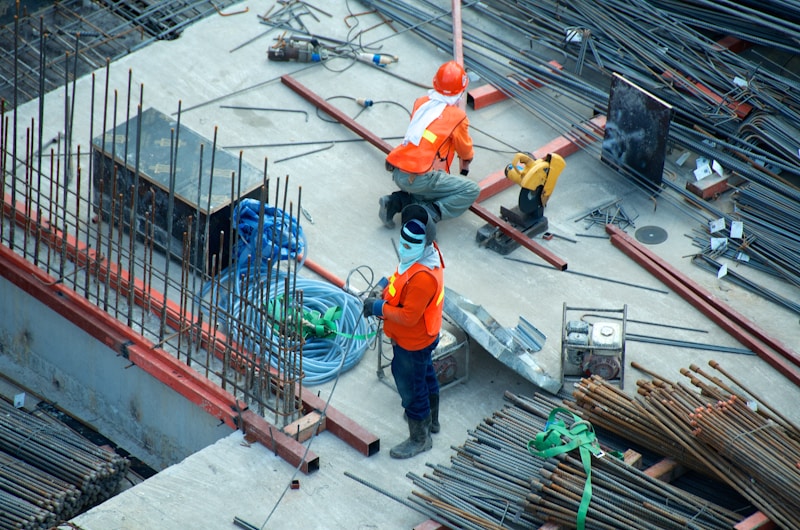
- Reinforcement must be properly lapped, tied, and supported with spacers to maintain specified cover
- Foundation must be set to the depth specified in the engineer's drawings — not reduced to "save time"
- Backfill must be compacted in 150mm layers — never use soft fill that will settle under floor
- A damp-proof membrane must be installed under all ground-bearing slabs
- Foundation must be inspected and approved by the structural engineer before backfilling
The True Cost of Getting the Foundation Wrong
Foundation failures in Nigeria are not rare — they make national news with tragic regularity. The cost of a foundation failure goes far beyond the building itself: the loss of all invested funds, potential injury or loss of life, and legal liability. A soil investigation report at ₦150,000 and a proper structural engineer at ₦300,000 are the most important investments in your project.
Are You Ready to Estimate Your Building Cost in Nigeria?
Stop guessing and start building with confidence. Our free Nigeria Building Cost Estimator generates an accurate, itemised Bill of Quantities in minutes — tailored to your location, house type, and finish level.
Start Your Free Estimate →