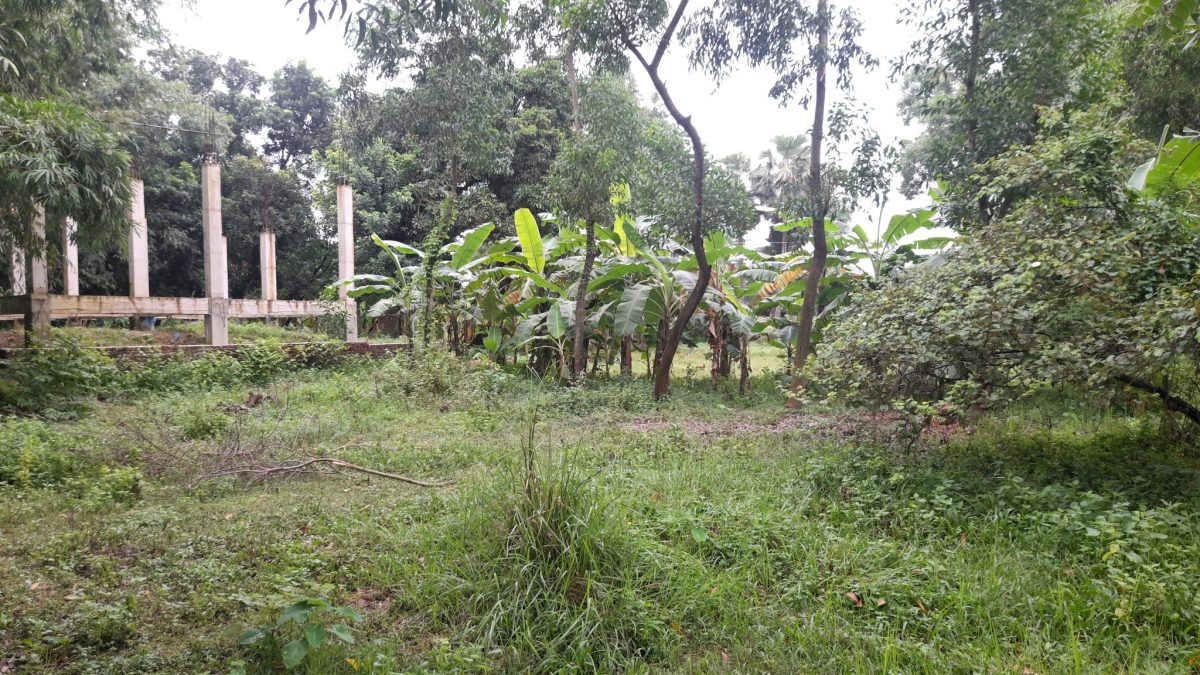
"Site clearance" is often quoted as a single number, but it is really four or five separate jobs bundled together, each with its own cost driver. Understanding the individual pieces makes it possible to check a contractor's quote properly instead of accepting a lump sum on trust — and to spot when a quote has quietly left something out. This guide breaks down each component using the same categories priced in our free Site Clearance Calculator.
1. Bush and Grass Clearing
This is the most visible part of clearance — cutting down grass, weeds and light shrubs across the plot. On a plot that has been informally maintained (grass cut occasionally, no real bush growth), this step is quick and cheap, priced close to the baseline rate. On a plot abandoned for several years, grass can grow well above head height and shrubs can become genuinely woody, both of which slow the work and justify a higher rate. Manual labour with cutlasses is the standard method for this stage on most residential plots.
2. Tree Felling
Trees are priced separately from general bush clearing because felling a mature tree safely is a distinct skill and risk, different from cutting grass. Cost depends on the tree's size, its proximity to any existing structure or boundary (which affects how carefully it must be felled), and whether the timber has any resale value that might offset the felling cost. Some Nigerian states require notification or a permit before felling certain species or trees above a certain size — confirm this before work starts to avoid a stop-work order or fine.
3. Stump Grubbing
Removing a stump after a tree is felled is a genuinely different job from the felling itself, and one that inexperienced quotes sometimes forget entirely. A stump left in the ground, even a small one, can obstruct foundation trench excavation later and its remaining roots can continue to decompose underground, potentially causing settlement under a slab or footing built directly over them. Grubbing — digging out the stump and its major root mass — is manual, slow work, particularly for older, larger trees with deep root systems, and should always be priced and confirmed as a distinct line item.
4. Rough Levelling and Grading
Once vegetation is cleared, the ground is rarely perfectly flat. Rough levelling brings the surface to an approximately even grade, filling small depressions and cutting down high spots, so that setting out and detailed excavation can proceed on a consistent working surface. This is priced separately because a flat, grassy plot may need none of it, while a sloped or uneven plot needs meaningful earthmoving regardless of how light the vegetation was — the two cost drivers (vegetation and terrain shape) are independent of each other.
5. Debris and Waste Disposal
Everything cut, felled and grubbed has to go somewhere. Cleared vegetation, felled timber not retained, and any existing rubble or waste found on the plot need to be hauled away or, where locally permitted, burned on site. Haulage cost depends on the volume of debris and the distance to an approved disposal point — a plot with a large volume of felled timber and old building rubble will cost meaningfully more to clear away than one with light grass cuttings alone.
Cross-Checking a Contractor's Lump-Sum Quote
When a contractor gives a single lump-sum figure for "site clearance," ask them to break it down against these five components, or use the calculator to build your own estimate from your plot's actual condition and compare the two. A wide gap in either direction is worth investigating — a suspiciously low lump sum may be quietly excluding stump grubbing or debris disposal, to be added later as a "variation"; a suspiciously high one may be pricing the whole plot for topsoil strip when only the building footprint needs it.
Worked Example: Breaking Down a Lump-Sum Quote
A contractor quotes ₦850,000 for clearing a 700 m² plot described as "moderately bushy with a few trees." Breaking it down against the calculator's components for a plot of this size and condition:
- Bush and grass clearing (moderate): ~₦370,000
- Tree felling (assume 3 medium trees): ~₦90,000
- Stump grubbing (3 stumps): ~₦75,000
- Rough levelling (slight slope): ~₦120,000
- Debris disposal: ~₦60,000
Component total: ~₦715,000 — roughly ₦135,000 below the lump-sum quote. This does not automatically mean the quote is padded; it might include a margin for unforeseen conditions, a wider debris disposal radius, or simply a different assumption about tree count and size. The value of breaking it down is having a specific, itemised conversation with the contractor about where the gap comes from, rather than accepting or rejecting the number on gut feeling alone.
Common Mistakes
- Accepting a lump sum without asking for a breakdown. Always ask what specifically is included, especially stump grubbing and debris disposal.
- Assuming levelling is included in bush clearing. They are separate cost drivers — a flat, grassy plot may need no levelling, while a sloped plot needs it regardless of vegetation.
- Not confirming where debris goes. Ask whether burning on site is planned (and confirm it is permitted locally) or whether haulage to a disposal point is included in the price.
Who Should Be on Site During Clearance
Beyond the clearance labour crew itself, having the right people present during the actual clearance work reduces the chance of a costly mistake. Whoever is managing the project — the owner, an appointed site manager, or the main contractor — should ideally be present when significant trees are identified for felling, to confirm they are not needed as boundary markers, shade for a planned outdoor area, or otherwise worth preserving, since a felled tree cannot be undone. Where the plot boundary is not perfectly clear from existing beacons or is disputed with a neighbour, a surveyor should confirm the actual boundary line before clearance work approaches it, since clearing or grading beyond your own boundary onto a neighbour's land is a common and entirely avoidable source of dispute.
If the clearance contractor is different from the main building contractor who will handle subsequent excavation and construction, a clear handover — confirming exactly what has been cleared, to what standard, and what if anything remains to be addressed (partial stump removal, uneven patches) — avoids finger-pointing later if the excavation crew discovers the site was not cleared to the expected standard. This is a small coordination step that is easy to skip when clearance and construction are treated as entirely separate, disconnected phases handled by different people with no formal handover between them.
Frequently Asked Questions
Is stump removal really necessary if I'm not building directly over it?
If a stump sits well clear of any planned foundation, driveway or slab, it may be left in place to save cost — but confirm this with your engineer, since decomposing roots nearby can still affect soil stability under nearby structures over time.
Can felled trees be sold to offset clearance cost?
Sometimes, for larger hardwood trees with commercial timber value — ask your clearance contractor whether they offer this, though the resale value on a typical residential plot's trees is usually modest relative to the total clearance cost.
What is the difference between rough levelling and the levelling done as part of excavation?
Rough levelling during site clearance brings the ground to an approximate, workable grade for setting out; the more precise levelling to a designed formation level happens during the bulk excavation stage, priced and executed separately as part of the substructure works.
Does site clearance include removing an existing structure?
No — demolishing an existing building, wall or other structure on the plot is priced and scoped separately through demolition, not as part of general site clearance, even though both may need to happen before construction can begin. See our Demolition Calculator for pricing an existing structure's removal, and treat it as a distinct line item from vegetation clearance and topsoil strip.
Can I negotiate site clearance cost by supplying my own labour?
Some contractors will price materials, machinery and supervision separately from labour if the client can supply a reliable local labour crew, which can reduce cost on a project where the owner already has access to workers — but this arrangement shifts quality and safety responsibility onto the client, so it should only be considered where proper supervision and safety practice can genuinely be maintained.
Price Your Site Clearance Job
The free Site Clearance Calculator prices bush clearing, grubbing and levelling by plot size and terrain. Digging foundations next? Try the Excavation Calculator. Building the whole house? The Professional Estimator covers every stage from site clearance to finishes.
Open the Site Clearance Calculator →
