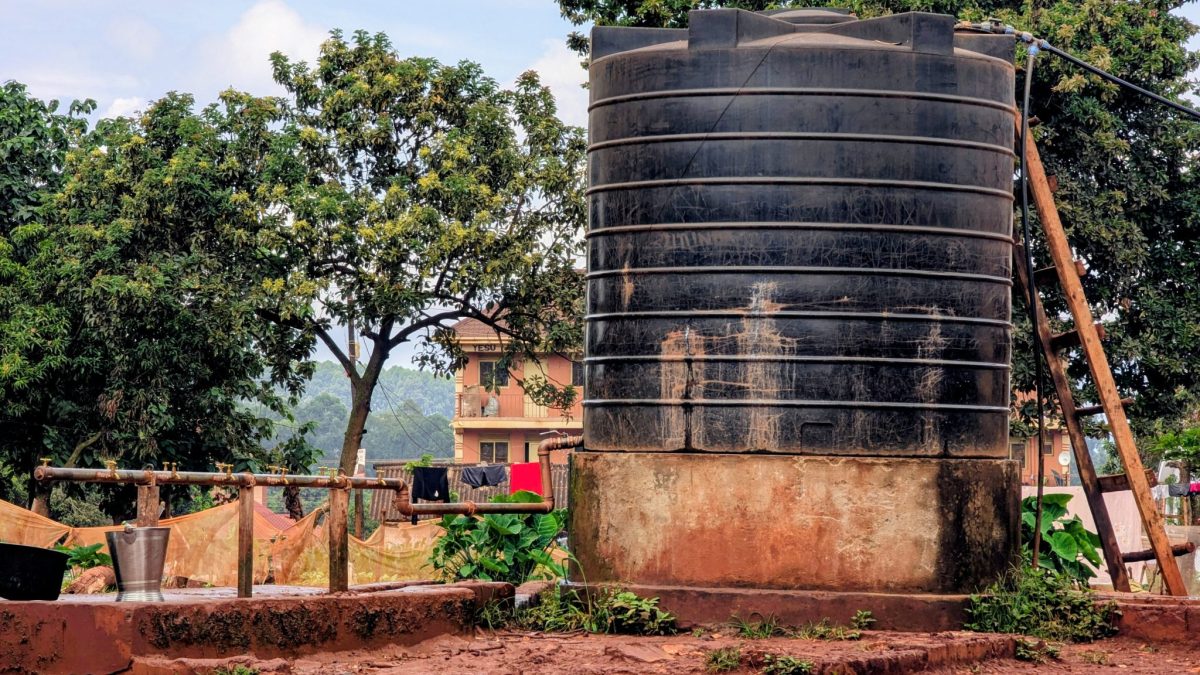
Few household failures are felt as immediately and universally as a dry tap — and unlike many building problems, a water tank issue affects everyone in the house at once, every time it occurs. This guide covers five common mistakes behind recurring water shortages in Nigerian homes, using the sizing principles behind our free Water Tank Calculator.
Mistake 1: Sizing the Tank for Exactly One Day's Demand
Nigerian water supply — municipal, borehole, or tanker-delivered — is rarely perfectly reliable on a fixed daily schedule. A tank sized to hold only a single day's calculated demand leaves zero buffer if a scheduled refill (a borehole pump run, a tanker delivery, municipal supply) is delayed even by a day, which happens often enough to plan around. Building in a 1–2 day reserve margin above calculated daily demand is standard, sensible practice, not an unnecessary extravagance.
Mistake 2: Underestimating Stand Height for a Multi-Storey Building
Weak water pressure on upper floors is one of the most common post-construction complaints in multi-storey Nigerian homes, and it almost always traces back to a tank stand that was not built tall enough to provide adequate gravity head above the highest fixture it needs to supply. This is a decision that must be made before the stand is built — retrofitting greater height afterward is far more disruptive and expensive than specifying it correctly at the design stage, or alternatively, planning for a booster pump from the outset if stand height is genuinely constrained.
Mistake 3: Not Accounting for Future Household Growth
A young family's first home, sized precisely for current occupancy with no allowance for growth, often needs its water storage capacity reconsidered within a few years as the household expands. While a tank can usually be upgraded or supplemented later, this typically means additional cost and disruption compared with sizing with reasonable future growth in mind from the start, particularly if the stand structure was also built to exactly match the smaller original tank's footprint and weight.
Mistake 4: Ignoring Full-Tank Weight in the Stand Design
Water is heavy — a filled 2,000-litre tank weighs 2 tonnes before accounting for the tank's own structure — and a stand that looks adequate when the tank is empty can be genuinely under-designed for the full, filled weight it needs to carry safely and permanently. This is a structural engineering matter, not something to leave to informal judgement; confirm the stand design, whether blockwork, steel or concrete, is engineered for the fully loaded weight of the largest tank it will ever carry.
Mistake 5: Neglecting Tank and Stand Maintenance
A water tank needs periodic cleaning to remove sediment and any biological growth that accumulates over time, and its stand structure (particularly steel components) benefits from periodic inspection for corrosion or structural wear. Treating the system as maintenance-free once installed can lead to water quality issues over time, and in the case of a neglected steel stand, a genuine structural safety concern given the weight the structure carries.
A Practical Water Storage Checklist
- Calculate daily demand from actual or realistically expected household occupancy, not a rough guess.
- Build in a 1–2 day reserve margin above calculated daily demand.
- Confirm stand height is adequate for the highest fixture it needs to supply, or plan for a booster pump.
- Size with reasonable allowance for expected future household growth.
- Confirm the stand is structurally engineered for the tank's fully loaded weight.
- Schedule periodic tank cleaning and stand inspection as ongoing maintenance, not a one-time installation task.
Planning Water Storage for Power Outage Resilience
Many Nigerian households also rely on an electric pump to move water from a borehole or ground-level tank up to an elevated storage tank, and a poorly planned system can leave a household without water during a power outage even if the tank itself has adequate stored capacity, simply because the pump cannot run to move water where it is needed. Considering how the pump will operate during an outage — whether it is on the same inverter or generator circuit as essential household loads, or left entirely dependent on grid power — is worth factoring into the wider water system design, not treated as a separate, unrelated electrical question.
A gravity-fed system from an already-filled elevated tank continues to supply water throughout a power outage without needing the pump to run at all, which is one of the practical advantages of prioritising adequate elevated storage over a purely pumped, on-demand system in a country where grid power reliability remains inconsistent in many areas. Where a household's water system depends heavily on continuous pump operation with minimal elevated reserve, an extended power outage becomes a genuine water-availability problem, not just an inconvenience, reinforcing the case for the reserve-margin sizing principle covered earlier in this guide.
Frequently Asked Questions
How can I tell if my current tank is too small for my household?
If the household regularly runs out of water before the next scheduled refill, even when supply arrives on its normal schedule, the tank is likely undersized for actual demand — compare your household's calculated daily need against the tank's stated capacity using the calculator.
How often should a water tank be cleaned?
Practice varies, but an annual cleaning is a reasonable general guideline for most residential tanks, more frequently if sediment or discolouration is noticed sooner.
What should I do if upper-floor water pressure is weak?
Confirm the tank stand's actual height above the affected fixtures against a reasonable minimum gravity-head guideline; if the stand cannot be raised, a booster pump is the more practical retrofit solution for improving pressure without rebuilding the stand.
Can a water tank stand double as a security or structural feature?
Some households design their tank stand to also provide additional utility, such as covered storage space beneath an elevated tank, though any additional use should be confirmed with whoever designs the stand to ensure it does not compromise the structure's primary job of safely carrying the tank's full loaded weight.
Should tank capacity be recalculated after adding a borehole to an existing municipal-supply home?
It is worth reviewing, since adding a more reliable borehole source can sometimes justify a smaller reserve margin than a household relying solely on intermittent municipal supply — though many households choose to keep existing storage capacity as a buffer against the possibility that the new borehole itself develops a fault or needs future maintenance.
What is the most overlooked mistake among the ones covered in this guide?
Underestimating stand height for future needs is arguably the most consequential, since it is the hardest and most expensive to correct after the fact — a tank can be swapped for a larger one relatively easily, but rebuilding or heightening an already-constructed stand is a much bigger undertaking, which is why this specific decision deserves the most upfront care during initial planning.
How can a self-builder verify a stand was actually built to the agreed height and specification?
Measure the completed stand's height directly and compare it against the design drawing or verbal agreement, and ask for confirmation of the structural specification used (reinforcement, block or steel section sizes) particularly for a taller stand carrying a large, heavy tank once filled with water.
What is a reasonable way to test a new tank installation before relying on it fully?
Fill the tank completely and observe the stand under full load for a period before connecting it as the household's sole water source, checking for any visible movement, cracking or instability — catching a structural issue at this stage, before the household becomes dependent on the system, is far less disruptive than discovering a problem after it is already in daily use.
Who should be consulted if a stand shows signs of movement after installation?
A structural engineer should assess any observed movement, cracking or instability promptly rather than waiting to see if it worsens — given the weight involved once a tank is filled, this is not a defect to monitor casually, and prompt professional assessment is the appropriate response as soon as any concerning sign appears.
Does the guidance in this article change for a commercial or multi-tenant building?
The same underlying principles apply, but with higher stakes given the larger number of people affected by a failure — professional structural design input for the stand, and careful demand calculation across all tenants, both become more important than on a typical single-family home, where the consequences of a modest miscalculation are more contained and easier to correct.
Size Your Water Storage
The free Water Tank Calculator works out the right tank size and stand cost from your household size. Need a borehole too? Try the Borehole Calculator. Building the whole house? The Professional Estimator covers water supply and plumbing throughout.
Open the Water Tank Calculator →
