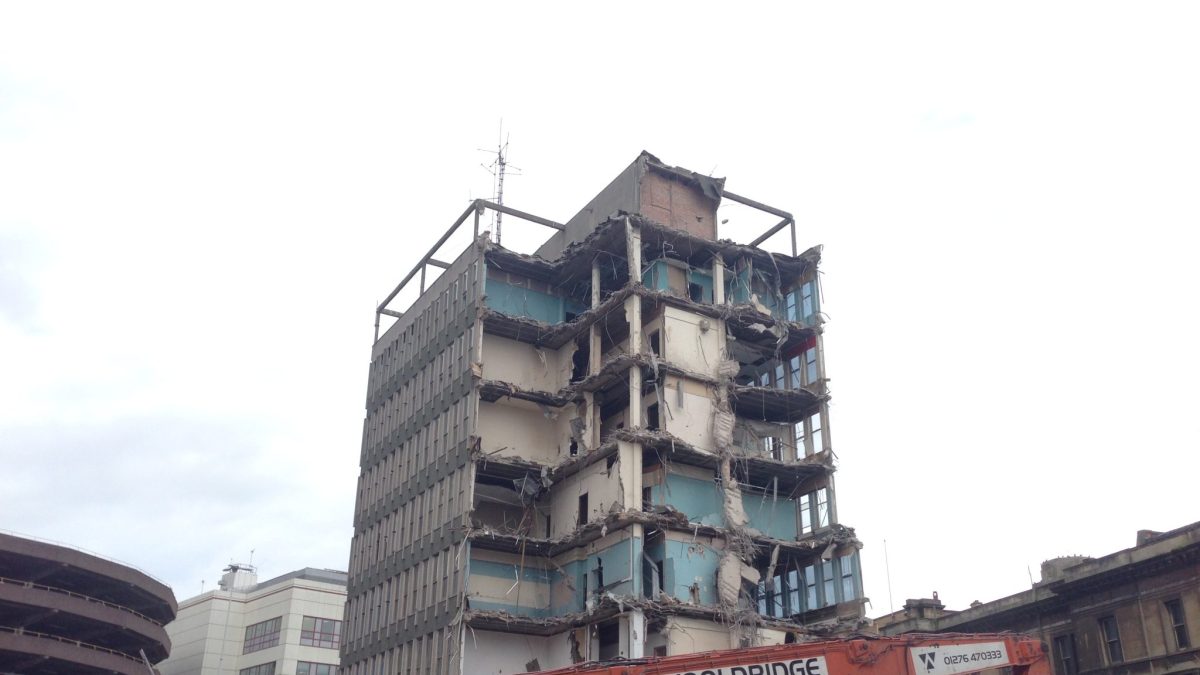
Demolition carries genuine safety risk alongside its budgeting complexity, and the two are more connected than they might first appear — a rushed or under-resourced demolition to save cost is often the same demolition where safety shortcuts creep in. This guide covers five common mistakes, using the pricing and specification categories in our free Demolition Calculator.
Mistake 1: Not Disconnecting Utilities Before Starting
Electrical, water and gas connections must be properly disconnected and confirmed safe before demolition work begins — cutting into a wall or structural element with live electrical wiring still present, or breaking a section of building with active water or gas supply still connected, is a genuine and entirely avoidable hazard. This step is sometimes rushed or skipped under time pressure, particularly on a smaller, informal demolition job where the process feels less "official" than a large commercial teardown, but the risk is identical regardless of project scale.
Mistake 2: Underestimating Debris Volume and Haulage Needs
Debris volume from a demolished structure is easy to underestimate from a quick visual assessment, particularly for buildings with a substantial concrete foundation and slab that generate more broken material than the visible above-ground structure suggests. Budgeting too few truck loads for haulage leads to a mid-job cost surprise once the actual volume becomes apparent, and can also leave debris piled on site for longer than planned, creating its own site safety and access hazard.
Mistake 3: Inadequate Edge Protection and Access for Elevated Work
Demolishing a roof or upper floor requires proper access — roof ladders, edge protection, and appropriately rated staging or a mobile elevating work platform — rather than improvised access using unsecured ladders or informal scaffolding assembled without proper bracing. Falls from height during demolition work are a serious and preventable risk, and the modest cost of proper access equipment is not a reasonable place to cut corners.
Mistake 4: Not Assessing Structural Sequence Before Starting
A building does not come down safely by simply attacking whichever part looks easiest first — the sequence in which structural elements are removed matters, since removing a load-bearing element prematurely can cause an uncontrolled, unplanned collapse of other parts of the structure still standing. A competent demolition contractor plans the sequence in advance, typically working from the top down and from non-load-bearing to load-bearing elements in a controlled order, rather than improvising sequence on site.
Mistake 5: Ignoring Dust and Debris Impact on Neighbours
Demolition generates significant dust and noise, and failing to manage this — through basic measures like water spraying to suppress dust, timing work to reasonable hours, and controlling where debris is allowed to fall or spread — can create genuine conflict with neighbours and, in some cases, regulatory complaints that disrupt the project timeline. Managing these impacts is both a good-neighbour practice and a practical risk-avoidance measure for keeping the project on schedule.
A Pre-Demolition Safety and Planning Checklist
- Confirm all utilities (electrical, water, gas) are disconnected and verified safe before work begins.
- Calculate debris volume properly, including foundation and slab material, not just visible above-ground structure.
- Provide proper access equipment (edge protection, rated staging, or a lift) for any elevated demolition work.
- Plan and follow a proper demolition sequence rather than improvising as the work proceeds.
- Manage dust, noise and debris spread to minimise impact on neighbouring properties.
Insurance and Contractual Protection for Demolition Work
Demolition carries elevated risk compared with most other construction trades, given the potential for structural collapse, damage to neighbouring property, or injury from falling debris, and this should be reflected in the insurance and contractual arrangements around any significant demolition job. Confirm the demolition contractor carries adequate public liability insurance covering damage to neighbouring structures and injury to third parties, and ask for evidence of this cover before work begins rather than assuming it is in place.
The demolition contract itself should clearly state the scope (full or partial demolition, specific elements to be preserved), the method to be used, responsibility for permits and utility disconnection, how scrap value is treated, and the debris disposal and site clean-up standard expected at completion. A written agreement covering these points, rather than an informal verbal understanding, gives both parties a clear reference point and meaningfully reduces the likelihood of a dispute once the visually dramatic and inherently messy process of demolition is actually underway.
Frequently Asked Questions
Who is responsible for disconnecting utilities before demolition?
This should be explicitly assigned in the demolition contract — typically the property owner arranges formal disconnection with the relevant utility provider before the demolition contractor's work begins, with written confirmation kept on file.
What happens if debris volume exceeds what was budgeted?
Additional haulage trips will be needed at the contracted per-load rate, which is why a careful upfront volume calculation — including foundation and slab material — matters for avoiding a significant unplanned cost increase mid-job.
Do I need a permit to demolish a building in Nigeria?
Requirements vary by state and local authority — check with your local planning or building control office before starting, since demolition without proper approval can result in penalties or work stoppage, particularly for larger or commercially zoned structures.
How should I handle a neighbour's objection to a planned demolition?
Listen to the specific concern and address it directly where reasonable — often objections relate to dust, noise timing, or worry about damage to a shared boundary wall, all of which can typically be addressed through clear communication about the planned method and timeline, or in some cases a formal party wall agreement, rather than becoming an unresolved dispute.
What should be in place before allowing demolition equipment onto a site?
Confirm utility disconnection is complete and verified, any required permits are in hand, insurance cover is confirmed, and a clear demolition sequence has been agreed with the contractor — proceeding without any one of these in place is a common and avoidable source of the mistakes covered throughout this guide.
How can I verify a demolition contractor is genuinely experienced and safety-conscious?
Ask for references from previous demolition jobs specifically, not just general construction experience, and ask directly about their approach to utility disconnection, sequencing and debris management — a contractor who answers these questions with specific, confident detail is a safer choice than one who treats demolition as a simple, undifferentiated extension of general construction work.
Is it worth photographing a building before demolition begins?
Yes — photographs documenting the existing building's condition, particularly any features close to a shared boundary or neighbouring structure, provide a useful record if a dispute later arises over whether demolition work caused damage to something that was already in a particular condition beforehand.
Does the calculator account for site-specific access difficulty in its pricing?
The baseline figures assume reasonably normal site access; a genuinely constrained plot needing specialist smaller equipment or extensive manual work due to access limits should be priced with an explicit allowance for that added difficulty, confirmed directly with your contractor after a site visit.
What is the most overlooked cost in a typical Nigerian demolition budget?
Debris haulage and disposal fees are frequently underestimated relative to their actual share of total demolition cost, since the visible, dramatic part of demolition (bringing the structure down) tends to dominate a first-time client's attention while the less visible but often larger cost of clearing away the resulting debris receives less upfront consideration.
Should demolition and new construction be contracted to the same company?
This can simplify coordination and scheduling, particularly for preserving elements the new build will reuse, but it is not essential — many projects successfully use a specialist demolition contractor followed by a separate main building contractor, provided the handover between the two is clearly documented and both understand what condition the cleared site should be left in.
What is a reasonable way to budget for the uncertainty in demolition cost estimates?
Given how much scrap recovery value and ground or structural surprises can shift the final net cost, building in a contingency of 10–20% above the initial estimate is a sensible planning margin for demolition, similar in principle to the contingency guidance given for renovation projects elsewhere on this site.
Is it common for demolition timelines to slip, and how should this be planned for?
Yes, particularly where unexpected structural conditions or utility complications are discovered mid-job — building a reasonable buffer into the overall project schedule around the demolition phase, rather than assuming it will complete exactly on the originally estimated date, protects the following construction phases from an avoidable knock-on delay to the whole project timeline.
Price Your Demolition Job
The free Demolition Calculator prices cutting, breaking, debris removal and scrap recovery for any structure. Need scaffolding for the facade? Try the Scaffolding Calculator. Rebuilding afterward? The Professional Estimator prices the new build from the ground up.
Open the Demolition Calculator →
