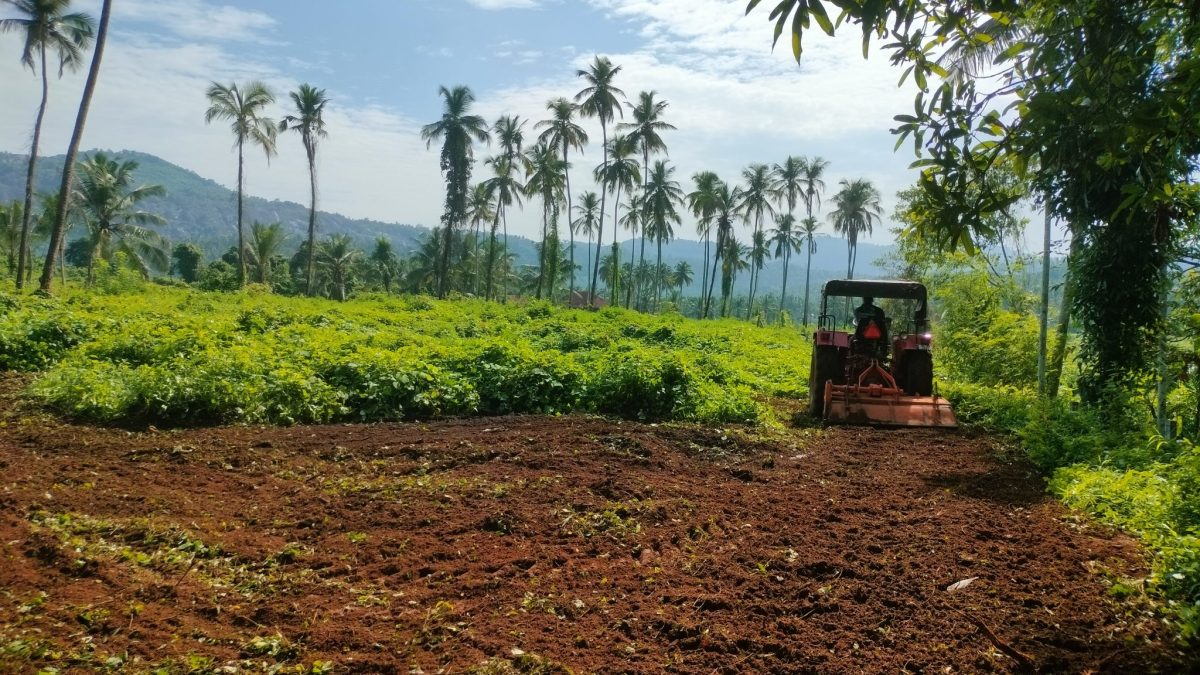
Before a single foundation trench is dug, a Nigerian building plot usually needs clearing — removing bush, grass, small trees, stumps and any surface debris until the ground is a clean, level starting point for setting out. It looks like a minor preliminary line item on paper, but on an overgrown, long-abandoned plot it can be a meaningfully large cost, and it is one of the items most often underpriced because it is quoted before anyone has actually walked the full site. This guide sets out 2026 Nigerian pricing and a worked example, following the same logic as our free Site Clearance Calculator.
What "Site Clearance" Actually Covers
Site clearance is a bundle of related tasks, not a single operation, and a proper quote should itemise them separately rather than giving one lump figure:
- Bush and grass clearing: cutting and removing tall grass, shrubs and light vegetation from the plot.
- Tree felling and stump removal: larger trees need felling (and sometimes a permit, depending on species and local regulation) and their stumps grubbed out, which is far more labour-intensive than clearing grass.
- Debris and rubble removal: clearing any existing waste, old foundations, or building rubble left on the plot.
- Topsoil strip: removing the organic top layer of soil (typically ~150mm) so that building work starts on stable, mineral soil rather than soil full of decomposing roots and organic matter, priced separately at roughly ₦2,000/m².
- Rough levelling: bringing the cleared surface to an approximately even grade ready for setting out and detailed excavation.
2026 Pricing by Plot Condition
| Terrain condition | Description | Relative cost multiplier |
|---|---|---|
| Light (grassy, open) | Grass and light scrub only, no significant trees | 1.0× baseline |
| Moderate (scattered trees/shrubs) | Some trees and shrubs needing felling and stump removal | 1.4–1.6× |
| Heavy (dense bush/forest) | Dense vegetation, multiple large trees, significant stump removal | 2.0–2.5× |
| Sloped or uneven | Adds levelling/grading work regardless of vegetation density | +20–40% on top of vegetation-based cost |
A plot that has sat undeveloped for several years in a semi-urban or rural area is far more likely to fall into the "moderate" or "heavy" category than an urban plot that has been maintained, even informally, by a neighbour or caretaker. Always assess the actual condition on a site visit before pricing — quoting from a description alone risks a significant underestimate.
Manual Labour vs Bulldozer
Small to medium plots with light-to-moderate vegetation are commonly cleared by manual labour with cutlasses, hoes and hand tools, which is economical and does not need machine access to the site. Larger plots, heavily overgrown land, or sites with substantial trees to remove are more efficiently cleared with a bulldozer or similar earthmoving machine, which can push over vegetation and grub out stumps far faster than a labour crew — but carries a mobilisation cost similar to the excavator mobilisation discussed for foundation digging, meaning it only makes economic sense above a certain plot size or clearance difficulty.
Worked Example: A Standard 100x100ft Plot
A typical Nigerian residential plot, 100ft × 100ft (roughly 929 m²), with moderate vegetation (scattered trees and shrubs, not dense bush):
- Plot area: 929 m²
- Baseline light clearance rate (allowance): ~₦450/m²
- Moderate multiplier (1.5×): 929 × 450 × 1.5 ≈ ₦627,075 for clearing and grubbing
- Topsoil strip over the building footprint only (say 150 m², not the whole plot): 150 × 2,000 = ₦300,000
- Debris removal and haulage (allowance for a moderate plot): ~₦80,000
Total site clearance: roughly ₦1,007,075 for this plot. Note that topsoil strip is often priced only across the actual building footprint and driveway/parking areas rather than the entire plot, since undeveloped garden areas do not need the same treatment — confirm this scope explicitly with your contractor before comparing quotes, since some quotes strip the whole plot and others only the building area, a significant cost difference.
Common Site Clearance Pricing Mistakes
- Quoting without a site visit. A plot described as "grassy" over the phone can turn out to have several mature trees once actually inspected — always walk the site before fixing a price.
- Forgetting stump removal. Felling a tree is only half the job; a stump left in the ground can interfere with foundation excavation and needs separate, often manual, grubbing.
- Not clarifying topsoil strip scope. Confirm whether the quote covers the whole plot or only the building footprint — this changes the price substantially.
- Ignoring debris disposal cost. Cleared vegetation and rubble need to be hauled away or burned (where locally permitted); this is a real cost that a bare "clearing" quote sometimes omits.
- Skipping the permit check for tree felling. Some Nigerian states require a permit or notification before felling certain tree species or sizes — check local regulation before clearing to avoid a fine or work stoppage.
Seasonal Timing for Site Clearance Work
The time of year you schedule site clearance has a genuine effect on both cost and ease of the work. Clearing during the dry season is generally faster and cheaper — vegetation is easier to cut and remove when not waterlogged, ground access for any machinery is firmer and less prone to getting bogged down, and burning cleared debris on site, where locally permitted, is far more practical and controlled in dry conditions than during the rains. Clearing during the rainy season is not impossible, but typically takes longer, may need additional dewatering or drainage management if the plot floods, and vegetation regrowth can be surprisingly fast in a plot that is cleared but then left idle for weeks before construction actually begins.
This seasonal consideration matters most for a project where clearance happens well ahead of when construction will actually start — if a plot is cleared at the start of the dry season but building will not commence until the following rainy season has passed, expect some regrowth of grass and light vegetation in the interim, and budget a smaller touch-up clearance closer to the actual construction start date rather than assuming the initial clearance will remain pristine indefinitely. For a project moving straight from clearance into substructure work within a matter of weeks, this is less of a concern, but it is still worth sequencing site clearance as close as practically possible to the start of excavation to minimise both regrowth and the risk of the cleared, exposed topsoil eroding during any intervening rain.
Frequently Asked Questions
How much does it cost to clear a standard plot in Nigeria?
For a standard 100x100ft plot with light-to-moderate vegetation, budget roughly ₦600,000–₦1,000,000 including topsoil strip over the building footprint, rising for dense bush or a plot needing significant tree felling. Use the calculator with your plot's actual size and condition for a specific figure.
Do I need a permit to clear my own land in Nigeria?
Requirements vary by state and by what is being cleared — felling certain tree species or clearing land near a waterway can trigger local environmental or forestry regulations. Check with your local planning authority before large-scale clearing, particularly on land with mature trees.
Should I clear the whole plot or just the building footprint?
Many builders clear only the building footprint plus access routes initially, leaving the rest of the plot for later, since full-plot clearance adds cost without immediate benefit if construction will only occupy part of the land in its first phase.
How long does site clearance take?
A light-to-moderate plot of around 900 m² typically takes 3–7 days with a manual labour crew, or 1–2 days with a bulldozer, depending on vegetation density and whether significant tree felling is involved.
Can site clearance and topsoil strip be done at the same time?
Yes, and on many projects they are sequenced back to back — vegetation and bush are cleared first, then the topsoil strip follows immediately over the same footprint, since both operations typically use similar access and, where a machine is involved, the same mobilisation. Pricing them as a single combined operation can sometimes secure a modest saving over booking them as two entirely separate jobs with separate contractor visits.
What happens to the topsoil once it is stripped?
Good-quality topsoil is often valuable and can be stockpiled on site for later use in landscaping and garden areas once construction is complete, rather than hauled away and disposed of as waste — confirm with your clearance contractor whether stockpiling on an unused part of the plot is practical for your site, since this can meaningfully reduce both disposal cost and the cost of buying topsoil back later for landscaping.
Price Your Site Clearance Job
The free Site Clearance Calculator prices bush clearing, grubbing and levelling by plot size and terrain. Digging foundations next? Try the Excavation Calculator. Building the whole house? The Professional Estimator covers every stage from site clearance to finishes.
Open the Site Clearance Calculator →
