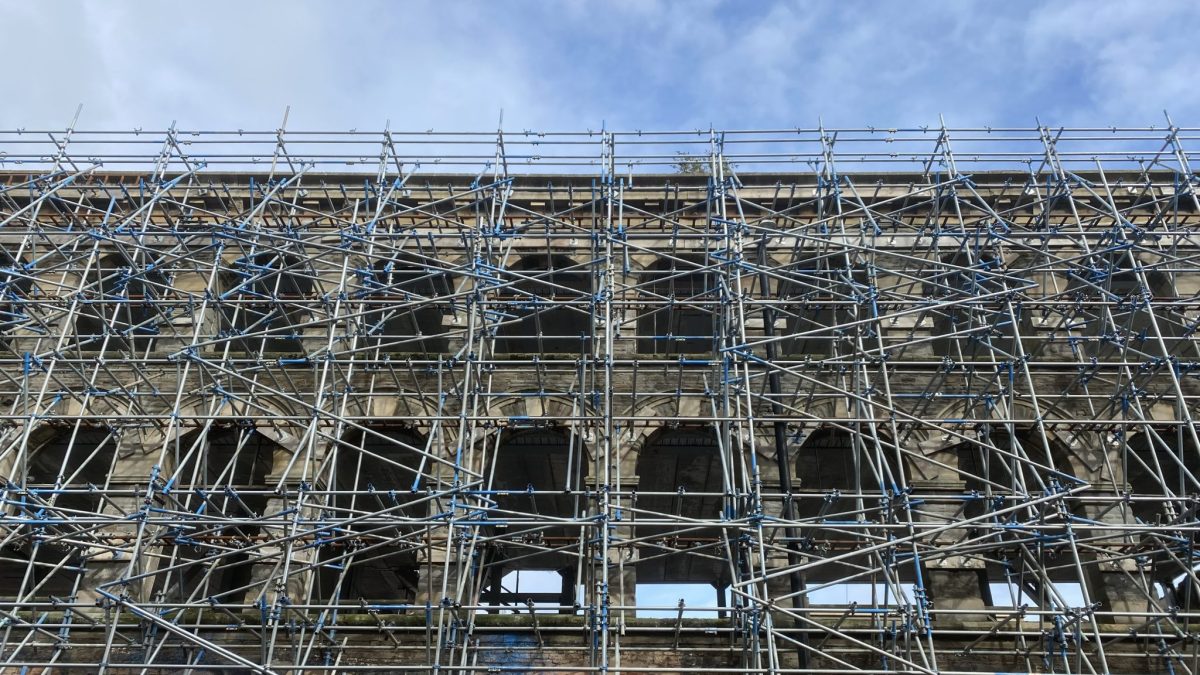
Scaffolding sits at an unusual intersection on a Nigerian construction budget — it is a genuine safety necessity for almost any work above ground level, priced by hire duration and erection labour rather than as a material purchase, and it is one of the line items most often underbudgeted because it feels temporary and secondary to the "real" building work. This guide sets out 2026 Nigerian pricing across scaffolding types, using the same categories priced in our free Scaffolding Calculator.
Scaffolding Types and Their Costs
| Scaffolding type | Hire rate (₦/m² per week) | Erection rate (₦/m²) | Notes |
|---|---|---|---|
| Tube and coupler | ~950 | ~650 | The most common, flexible general-purpose scaffolding system |
| System scaffolding (proprietary frame) | ~1,200 | ~550 | Faster to erect due to standardised, pre-engineered components; higher hire rate offset by lower erection labour cost |
| Bamboo | ~350 | ~280 | The most economical traditional option, still used on many Nigerian sites, particularly for lighter-duty applications |
Alongside the structure itself, scaffold boards (the platform decking workers stand on) are priced separately per square metre of platform per week, and safety items — full-body harnesses with shock-absorbing lanyards, and periodic scaffold inspection and re-certification — add further necessary cost that should never be cut to save money, given the direct safety consequences.
Tube & Coupler vs System Scaffolding vs Bamboo
Tube and coupler scaffolding remains the most versatile option in the Nigerian market, since its components can be configured to almost any building shape or awkward access requirement, at a moderate cost. System (proprietary frame) scaffolding trades some of that flexibility for speed — pre-engineered components click together faster than tube and coupler can be assembled with individual fittings, which can offset its higher hire rate through lower erection labour cost, particularly on a larger, more standardised job where the speed advantage compounds. Bamboo scaffolding remains in genuine use on many Nigerian sites for its low cost and local availability, though its use should be limited to appropriate, lighter-duty applications with a competent, experienced erection crew, given the greater variability in bamboo's structural properties compared with manufactured steel components.
Safety Equipment: Not an Optional Extra
A full-body harness with a shock-absorbing lanyard, priced per set, is essential safety equipment for anyone working at height on or from a scaffold platform, and periodic scaffold inspection and re-certification — checking the structure remains sound as work progresses and conditions change — is a genuine, recurring cost that should be budgeted for the full duration scaffolding remains erected, not just at initial setup. These costs are frequently the first thing cut on a tight budget, which is precisely backwards given what they protect against.
Worked Example: A Two-Storey Building Facade
External rendering and painting work on a two-storey building with a facade area of 90 m², using tube and coupler scaffolding hired for 3 weeks:
- Scaffold hire (90 m² × ₦950/week × 3 weeks): ₦256,500
- Erection (90 m² × ₦650): ₦58,500
- Scaffold boards (90 m² × ₦400/week × 3 weeks): ₦108,000
- Harnesses (3 sets for the crew, ₦23,000 each): ₦69,000
- Scaffold inspection (1 visit): ₦25,000
Total: roughly ₦517,000 for scaffolding alone on this facade job, before the rendering and painting work it supports. This is a real cost that should be included explicitly in any external finishing quote, not absorbed silently into a contractor's overall margin where it becomes invisible to the client comparing quotes.
Common Scaffolding Costing Mistakes
- Underestimating hire duration. Scaffolding hire is priced per week, and an optimistic timeline that does not account for likely delays (weather, other trades finishing late) can leave a real gap between budgeted and actual hire cost.
- Skipping safety equipment to save cost. Harnesses and inspections are not optional extras — cutting them is a direct safety risk with real legal and human consequences, not a legitimate cost-saving measure.
- Not accounting for erection and dismantling separately from hire. Hire rate covers the period the scaffold remains up; erection and dismantling labour is a separate, one-time cost on top.
- Choosing bamboo scaffolding without an experienced crew. Bamboo scaffolding's safety depends heavily on the erecting crew's skill and judgement — an inexperienced crew working with an unfamiliar material is a real risk regardless of cost savings.
Scaffolding Access Types Beyond the Basic Structure
Beyond the main tube, frame or bamboo structure itself, several access-related components complete a functional, safe scaffold system and should be included in any complete pricing exercise. Ladder access — properly secured ladders providing safe movement between platform levels — is a basic but essential component, since informal or improvised access between levels is a common source of falls on poorly managed sites. Toe boards along platform edges prevent tools and materials from being accidentally kicked off the platform onto workers or the public below, a requirement that becomes particularly important on a scaffold erected near a public walkway or occupied area beneath.
Debris netting or sheeting, wrapped around the outer face of a scaffold, serves two purposes: containing dust and debris generated by the work being carried out (particularly relevant for demolition or heavy cutting work) and providing some additional wind screening, which on a tall structure can itself increase wind loading on the scaffold and needs to be accounted for in the bracing design rather than added as an afterthought. Each of these access and safety components is a genuine, priced line item that a complete scaffolding quote should itemise, rather than assuming they are automatically bundled into a simple per-square-metre hire rate.
Frequently Asked Questions
How is scaffolding hire priced — per day, week or month?
Most Nigerian scaffolding hire is priced per week per square metre of scaffold area, though some suppliers offer monthly rates for longer-duration jobs at a modestly reduced weekly-equivalent rate.
Is bamboo scaffolding safe for Nigerian construction sites?
It remains in widespread use and can be safe when erected by an experienced, competent crew for appropriate applications, but its structural properties are more variable than manufactured steel scaffolding, making crew experience and proper technique especially important.
Can scaffolding be purchased instead of hired for a self-builder doing multiple projects?
For someone genuinely planning several projects over time, purchasing tube and coupler components (which are highly reusable and modular) can be more economical than repeated hiring, though this requires storage space and the discipline to maintain and inspect owned equipment properly between uses, responsibilities that hiring transfers to the supplier.
Does scaffolding need a permit from local authorities in Nigeria?
Requirements vary by state and by whether the scaffold encroaches on a public right of way — check with your local planning authority for any scaffold extending over or adjacent to a public pavement or road, since this can trigger specific permit and public-safety requirements beyond standard site-level safety practice.
How does scaffolding cost factor into an overall exterior finishing budget?
It should be itemised explicitly alongside the rendering, painting or other exterior work it supports, rather than left as an unstated assumption within a contractor's overall exterior finishing quote — this transparency makes it easier to compare quotes and to understand exactly what portion of the total cost relates to access versus the actual finishing work itself, not just the visible finish.
Who is responsible for scaffold safety inspections?
This should be agreed as part of the scaffolding hire or erection contract — typically the scaffolding supplier or a competent third party conducts periodic inspections, and this should be built into the project's ongoing safety plan for as long as the scaffold remains erected.
Does scaffolding cost include access ladders and toe boards?
This varies by supplier and should be confirmed explicitly — some quotes bundle these access and safety essentials into the base hire rate, while others price them as separate line items, making it important to check exactly what a quoted figure includes before comparing between suppliers.
How is scaffolding priced differently for an internal versus external application?
Internal scaffolding (for high ceiling work, an internal atrium, or similar) is typically less exposed to wind loading than an external facade scaffold, which can simplify the bracing requirement somewhat, though access constraints through doorways and internal spaces can sometimes offset this by limiting the size of components that can be brought in and erected.
Does the calculator account for scaffold height when pricing hire and erection?
Taller scaffolds generally need more bracing, ties and platform levels per square metre of facade covered than a shorter structure, and this should be reflected in a proper quote — confirm with your supplier that the pricing accounts for your building's actual height rather than assuming a flat per-square-metre rate applies uniformly regardless of how tall the structure needs to be for the specific job.
Price Your Scaffolding Needs
The free Scaffolding Calculator prices tube, system and bamboo scaffolding hire and erection, plus safety equipment. Painting or plastering at height too? Try the Painting Cost Calculator. Building the whole house? The Professional Estimator covers every stage of the build.
Open the Scaffolding Calculator →
