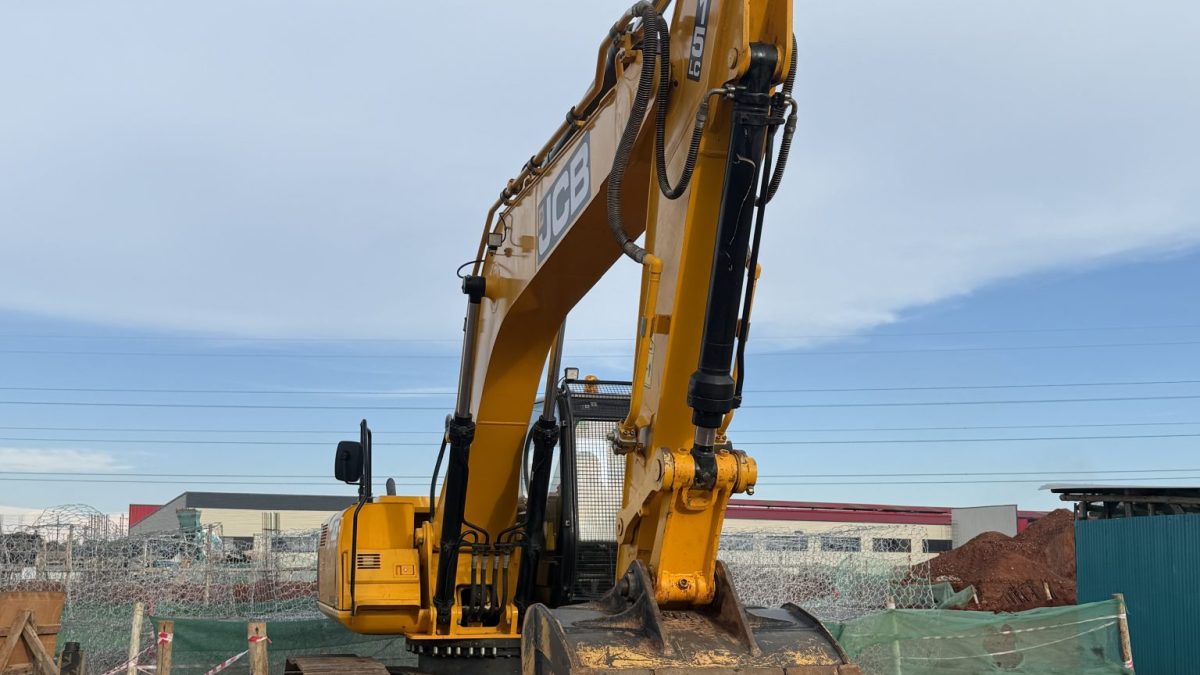
On many Nigerian sites, the choice between manual labour and a hired excavator comes down to a genuine cost trade-off, not habit. Machines are fast but carry a mobilisation cost that only pays for itself above a certain volume; manual labour has no mobilisation cost but is slower and more expensive per cubic metre once volume climbs. This guide compares the two directly using the same figures behind our free Excavation Calculator.
Cost Per Cubic Metre: The Baseline Comparison
| Method | Typical rate (₦/m³, normal soil) | What it includes |
|---|---|---|
| Manual labour | ~8,000 | Labour only, pickaxe and shovel work, spoil thrown clear of the trench |
| Machine (mini/standard excavator) | ~8,500–11,000 depending on dig type, plus mobilisation | Operator, fuel, and machine hire for the excavation period |
On a pure rate-per-cubic-metre basis the two methods look similar, which is misleading — the real difference is mobilisation cost and speed, both of which change the comparison sharply depending on job size.
Mobilisation Cost Changes Everything
Bringing an excavator to a small residential site — loading it onto a low-loader, transporting it, and returning it afterward — typically costs a fixed fee regardless of how much digging is actually done. On a very small job (a single trench for a boundary wall foundation, say 8m³), this mobilisation fee can exceed the entire cost of the digging itself, making manual labour the clear economic choice. On a full building's foundation trenches (25–40m³) or a bulk excavation for a slab (50m³+), the mobilisation cost spreads across enough volume that machine excavation becomes markedly cheaper overall, even before counting the time saved.
Speed: Days vs Weeks
A mini-excavator can typically dig 25–40 m³ of ordinary trench excavation in a single day, doing in hours what a labour crew of 4–6 workers would take several days to complete by hand. On a project where the construction schedule is tight, or where an open trench sitting exposed to rain for days is itself a risk (side collapse, water pooling, safety hazard), the speed of machine excavation has real value beyond the direct cost comparison.
Access: The Deciding Factor Machines Cannot Overcome
Speed and cost only matter if the machine can physically get to the work. Many Nigerian urban and peri-urban plots have narrow gate access, tight side setbacks, or overhead obstructions (power lines, existing structures) that a standard or even mini excavator cannot pass. In these situations, manual labour is not a cost choice at all — it is the only available option, regardless of volume, unless the access constraint can be resolved (temporarily removing a gate pillar, for instance) at its own additional cost.
Worked Comparison: Where the Crossover Sits
Take a trench excavation job and compare the two methods at different volumes, assuming a machine mobilisation fee of roughly ₦80,000 for a mini-excavator on a typical urban job:
| Volume | Manual (₦8,000/m³) | Machine (₦9,000/m³ dig rate + ₦80,000 mobilisation) | Cheaper option |
|---|---|---|---|
| 8 m³ | ₦64,000 | ₦152,000 | Manual |
| 15 m³ | ₦120,000 | ₦215,000 | Manual |
| 30 m³ | ₦240,000 | ₦350,000 | Manual (marginally) |
| 50 m³ | ₦400,000 | ₦530,000 | Manual on pure cost, but machine saves 1–2 weeks |
| 100 m³ | ₦800,000 | ₦980,000 | Manual on pure cost, machine strongly favoured on time |
On pure cost alone, manual labour often wins even at larger volumes in this simplified comparison — the real-world calculation shifts toward machines once the value of time (holding costs, crew availability for other trades waiting on the substructure, and reduced exposure of an open trench to rain) is properly weighed against the mobilisation premium. On bulk excavation for a large slab or basement, where digging by hand becomes genuinely impractical rather than just slower, machine excavation is effectively the only realistic option regardless of the cost table above.
When Rocky or Difficult Ground Changes the Calculation
Manual labour struggles disproportionately in rocky or heavily compacted lateritic ground — a pickaxe crew can be slowed to a fraction of their normal-soil output, while a machine fitted with a rock breaker attachment (at extra hire cost) maintains a more consistent output. On confirmed rocky ground, the crossover point in favour of machine excavation shifts to a much smaller volume than the table above suggests, since manual labour cost per cubic metre can multiply well beyond the 1.5–2× adjustment used for machine rates on the same ground.
Common Mistakes
- Defaulting to machine excavation out of habit on small jobs. For jobs under roughly 15–20 m³ with good access, manual labour is usually cheaper once mobilisation is accounted for.
- Defaulting to manual labour on large volumes to "save money." Past a certain volume, the time saved by a machine has real value that a pure cost-per-cubic-metre comparison misses.
- Not checking access before booking a machine. Confirm the excavator can physically reach and manoeuvre on site before committing — cancellation or standby fees for a machine that cannot access the site are a real, avoidable cost.
- Ignoring rock risk in the method decision. If there is any indication of rocky ground, factor this into the manual-vs-machine decision before committing to a labour crew that could be badly slowed.
Safety Considerations That Should Factor Into the Method Decision
Beyond pure cost, safety considerations should weigh into the manual-versus-machine decision, particularly for deeper trenches. Any trench deeper than about 1.2 metres carries a genuine risk of side collapse, especially in loose, sandy or recently disturbed soil, or after rain has saturated the trench walls — a risk that applies to both manual and machine-dug trenches once workers need to enter them for formwork, reinforcement fixing or blockwork. Proper shoring or battering back the trench sides on deeper excavations is not an optional extra to skip for a small cost saving; trench collapse is a well-documented cause of serious injury and death on construction sites globally, and Nigerian sites are not immune to this risk.
Manual excavation crews working in a confined, unshored deep trench face this risk directly and continuously throughout the dig; machine excavation reduces the time workers spend inside an open trench (since the machine does the digging from above, and workers enter mainly for trimming, formwork and concrete work), which is a genuine, if secondary, safety argument in favour of machine excavation on deeper trenches, independent of the cost comparison. Whichever method is chosen, a competent person should assess trench stability before allowing any worker to enter a trench beyond the shallow depths where collapse risk is minimal, and shoring, battering or trench boxes should be used wherever the depth or soil conditions warrant it.
Machine operators also need proper training and the machine needs to be appropriately matched to the job — an operator unfamiliar with a specific machine, or a machine underpowered or oversized for the confined space it is working in, both introduce risk that a cost comparison alone will not capture. Factor the availability of a properly trained, experienced operator into the machine excavation option, not just the headline hire rate for the equipment itself.
Frequently Asked Questions
At what volume does machine excavation become cheaper than manual?
There is no fixed universal number — it depends on the mobilisation fee for your area and the specific rates you are quoted — but as a rough guide, volumes above roughly 40–60 m³ in normal soil commonly favour machine excavation once time value is considered, while smaller jobs usually favour manual labour on pure cost.
Can I mix manual and machine excavation on the same job?
Yes, and this is common — a machine handles the bulk of an open, accessible excavation while manual labour trims edges, digs around existing services, or completes sections a machine cannot reach.
Does manual excavation take longer to plan for?
It needs a larger labour crew and more lead time to mobilise workers than booking a single machine and operator, so factor this into your schedule if you choose manual labour for a time-sensitive project.
Is it worth hiring a machine just to dig a small extension foundation?
For a genuinely small volume with good access, manual labour usually remains the more economical choice once mobilisation cost is factored in, as this guide's worked comparison shows — but if the site already has a machine mobilised for other work nearby, negotiating a short additional session on the same mobilisation can sometimes be more cost-effective than either a full separate mobilisation or a slow manual dig on a tight schedule.
Does the manual-versus-machine decision change for a trench dug in the rainy season?
It can — a machine typically clears a trench faster, reducing the number of days it sits open and exposed to rain, which lowers the risk of side collapse and water pooling that a slower manual dig faces during a wet spell. This time-based safety benefit is worth weighing alongside the pure cost comparison when a project's excavation phase coincides with the rainy season.
Work Out Your Excavation Cost
The free Excavation Calculator prices bulk and trench excavation by volume, with soil-type and access adjustments. Clearing the plot first? Try the Site Clearance Calculator. Building the whole house? The Professional Estimator includes substructure works from foundation to damp-proof course.
Open the Excavation Calculator →
