Quick answer: As of 2026, a 50kg bag of cement in Nigeria costs approximately ₦12,000 to ₦13,000 depending on brand and location, with most builders paying around ₦12,000 for a standard bag. Prices in Lagos and Abuja typically run slightly higher than inland cities due to transport and distribution costs.
Why Cement Prices Change So Often
Cement is one of the most price-volatile materials in Nigerian construction, and the price you see this month is rarely the price you will see in six months. The main drivers are:
- Energy costs — cement production is energy-intensive, and diesel/gas price changes feed directly into manufacturing cost
- Exchange rate movements — even locally produced cement depends on imported machinery, spare parts, and in some cases clinker
- Distribution and logistics — transport cost from the factory to your site can be a meaningful share of the final price, especially outside the producing state
- Demand cycles — prices often rise in the dry season (December–April) when construction activity peaks across Nigeria
Because of this volatility, treat any specific naira figure — including the ones in this article — as a snapshot, not a fixed number. Always confirm with a supplier before finalising your budget.
Current Cement Brand Prices in Nigeria (2026)
| Brand | Price per 50kg Bag (Approx.) |
|---|---|
| Dangote Cement | ₦12,000 |
| UniCem | ₦12,000 |
| BUA Cement | ₦12,500 |
| Ibeto Cement | ₦12,500 |
| Lafarge Cement | ₦13,000 |
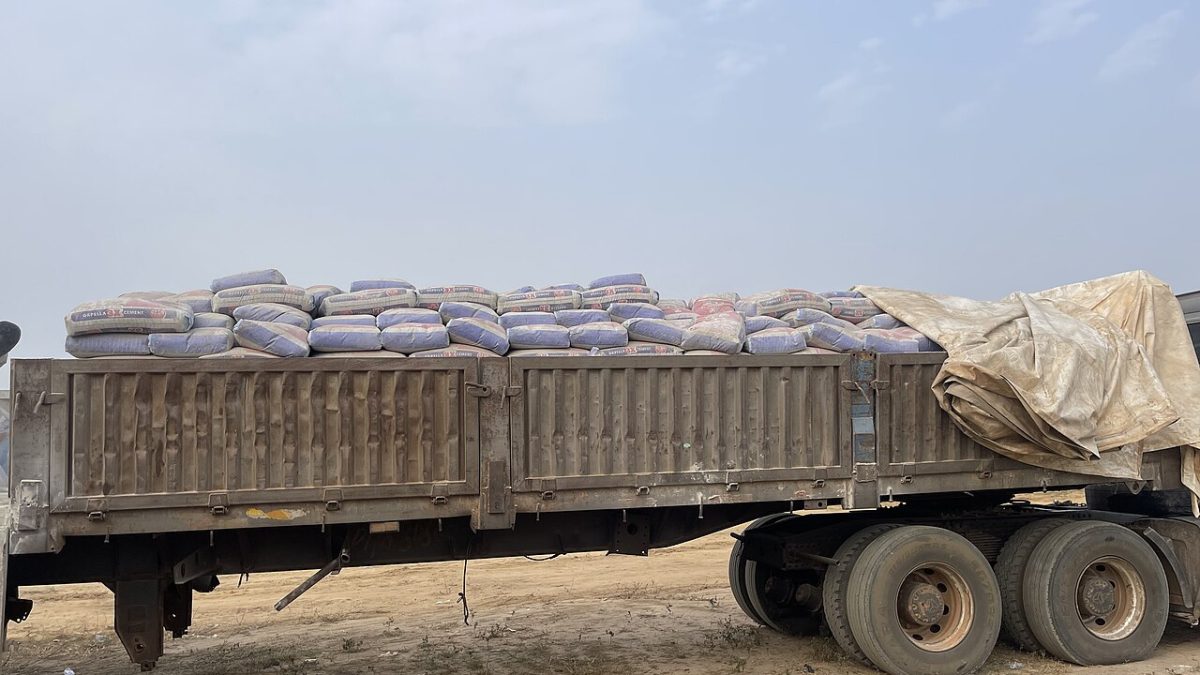
These figures are baseline supply prices and can vary by ₦500–₦1,500 per bag between regions, between retail outlets, and between bulk and single-bag purchases. Buying a full trailer load (600 bags) typically secures a meaningfully lower per-bag rate than buying from a local block of flats supplier in small quantities.
Does the Brand of Cement Actually Matter?
For standard residential construction in Nigeria — block mortar, plastering, floor screed, and ordinary structural concrete — any of the major brands (Dangote, BUA, UniCem, Ibeto, Lafarge) will perform adequately when used correctly. All are sold as 32.5 or 42.5 grade Portland cement and meet the Standards Organisation of Nigeria (SON) specification. The differences that matter more in practice are:
- Local availability — buying the brand most readily stocked near your site avoids delivery delays and reduces transport cost
- Consistency of supply — some brands have stronger distribution networks in certain states, reducing the risk of running out mid-pour
- Grade for structural work — for columns, ring beams, and suspended slabs, confirm with your structural engineer whether 42.5 grade is specified — using the wrong grade for structural elements is a real risk, not a brand preference issue
How Much Cement Will You Actually Need?
Cement requirement depends heavily on your house size, foundation type, and floor system — not just bedroom count. A standard 3-bedroom bungalow typically uses 350–550 bags across foundation, block work, floor slab, and plastering. For a full stage-by-stage breakdown with a calculation you can adjust for your own house size, see our guide on how many bags of cement you need for a 3-bedroom house, or use the Cement Calculator to get an exact figure for your specific building, including foundation, blockwork, screed, and plastering.
Tips for Buying Cement in Nigeria
- Buy in bulk where possible — even ordering 50–100 bags at once instead of buying weekly in small quantities can secure a better rate
- Check the manufacture date — cement loses strength after prolonged storage, especially in humid conditions; avoid stock that has sat in a warehouse for several months
- Store cement off the ground on pallets, under cover, away from moisture — damp cement hardens in the bag and becomes unusable
- Avoid panic-buying ahead of expected price increases unless you have proper dry storage — spoiled cement is a worse loss than a price increase
Get a Live, Itemised Estimate
Rather than tracking individual material prices manually, the Nigeria Building Cost Estimator uses current Nigerian market rates — including cement — to generate a full, itemised Bill of Quantities for your specific project. As prices change, your estimate reflects current rates rather than the figures in this article, which will age as the market moves.
Are You Ready to Estimate Your Building Cost in Nigeria?
Stop guessing and start building with confidence. Our free Nigeria Building Cost Estimator generates an accurate, itemised Bill of Quantities in minutes — tailored to your location, house type, and finish level.
Start Your Free Estimate →