Every proper Bill of Quantities ends with a section that gets skimmed past — usually labelled "Miscellaneous" or "Sundries" — sitting after the big-ticket sections like substructure, superstructure, roofing and finishes. It looks like an afterthought precisely because none of its individual line items looks impressive next to a ₦10 million finishes budget. That is a mistake: this section is where the tools and equipment that make everything else possible actually live.
What Belongs Here
In a well-itemised Nigerian BOQ, the Miscellaneous & Site section typically covers:
- Water for construction — priced by tanker load (around ₦15,000/load), not litres, since that is how it is actually purchased and delivered on real sites.
- Nails (around ₦1,900/kg) and binding wire (around ₦2,300/kg) — consumables used throughout formwork, reinforcement tying, and general fixing.
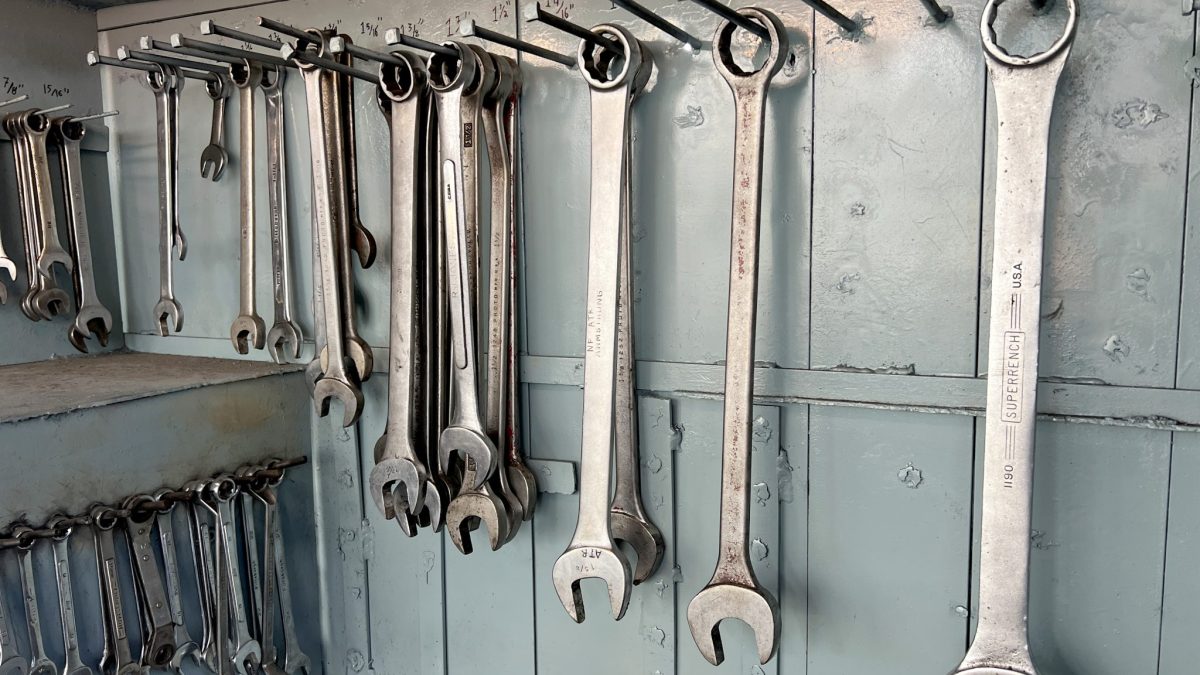
- Wheelbarrows (₦47,000), shovels (₦13,000), head pans (₦8,500), and buckets (₦5,500) — the equipment that physically moves material around the site.
- Scaffolding hire (₦27,000) — for the period external wall, plastering, and roofing work actually requires it.
- Site clearing and a genuine provisional sum for truly unforeseeable sundries — which should be a small, honest allowance, not a dumping ground for everything the estimator did not bother itemising properly.
Why This Section Gets Undervalued
Every item in it is individually cheap relative to a bag of cement or a roofing sheet, which makes the whole section easy to mentally round down to "not worth worrying about." Summed across a real project, though, this section commonly lands in the hundreds of thousands of naira — a real number, and one that is entirely knowable in advance rather than something to discover as a surprise.
Miscellaneous vs Contingency — Not the Same Thing
These two get confused constantly, and the difference matters. Contingency is a percentage buffer against price volatility and genuine unknowns — the fact that cement might cost more next month than this month, or that ground conditions turn out different from what a visual inspection suggested. Miscellaneous is a set of specific, knowable, nameable items that should be priced as accurately as any other section, not folded into "we will just add 10% for anything we forgot."
A BOQ that has a healthy contingency percentage but an empty or token Miscellaneous section has not actually covered its bases — it has just relabelled a gap as a buffer.
How to Read This Section on a Quote You Are Reviewing
If a contractor's BOQ has no Miscellaneous section at all, or a flat token number with no breakdown, that is worth asking about directly — either genuine costs are being absorbed elsewhere in the quote (fine, but confirm it), or they are simply not accounted for anywhere (not fine, and worth catching before you sign rather than after).
The Practical Point
A properly itemised Miscellaneous & Site section is a sign of a careful estimate, not proof of a padded one — every item on it corresponds to something a real site genuinely needs. Treat it with the same scrutiny you would give the substructure or finishes sections, not as filler at the bottom of the document.
How This Section Should Scale With Project Size
Unlike materials sections, which scale fairly directly with floor area, the Miscellaneous & Site section scales more with project duration and crew size than with square metreage alone. A larger house built by the same small crew over a longer timeline needs roughly the same wheelbarrows and shovels as a smaller house — what increases is water consumption (more curing, more mixing, spread over more time) and scaffolding duration (a bigger external wall area under working conditions for longer). This is worth knowing when sanity-checking whether this section's total looks proportionate for your specific project.
Reading a Suspiciously Round Number
A Miscellaneous section that shows one flat round figure — "₦500,000 sundries," for instance — with no breakdown is a different kind of quote from one that itemises each item at the rates discussed above. The flat-figure version might be entirely fair, but you cannot verify that without a breakdown, and a round number with no supporting detail is exactly the kind of line item worth asking a contractor to itemise before you accept it at face value.
Where a DIY-Managed Build Handles This Differently
If you are managing your own build without a single main contractor — sourcing materials and coordinating trades yourself — this section becomes something you are directly purchasing rather than reviewing on someone else's quote. In that case, the practical value of the itemised rates above is even more direct: they give you a shopping list with real prices attached, rather than a vague sense that "some equipment" will be needed at some point.
Revisiting This Section as the Project Progresses
Unlike a fixed materials order, this section benefits from being revisited periodically rather than purchased once upfront — water needs vary with weather and construction phase, scaffolding duration can shift if the project timeline changes, and consumables like nails and binding wire get used at a pace that is hard to predict precisely at the outset. Treat the initial number as a solid planning estimate, not a figure that should never move as the real project unfolds.
How Our Estimator Calculates This Section
Rather than applying a flat percentage guess, our Estimator prices each item in this section using the same real baseline rates referenced throughout this post — water by tanker load, wheelbarrows, shovels, head pans and buckets by unit, scaffolding as a hire allowance — and lets you adjust quantities to match your specific project rather than accepting a generic default. This means the number you see reflects your actual inputs, not an industry-wide average that may not fit your project's scale or duration.
A Common Mistake When Comparing Estimates
When comparing your own estimate against a contractor's quote, make sure you are comparing this section on the same basis — some quotes fold Miscellaneous entirely into a general contingency percentage, which makes a line-by-line comparison against an itemised estimate misleading unless you account for that difference in structure. Ask specifically whether a contractor's contingency percentage is meant to also cover site equipment, or whether equipment is separately itemised elsewhere in their document, before assuming two very differently structured quotes are directly comparable.
Why Precision Here Builds Trust
A contractor or self-prepared estimate that itemises this section carefully — real rates, real quantities, not a vague round-number placeholder — signals the same care was likely applied to the more visible, bigger-ticket sections of the document. Conversely, a Miscellaneous section that reads as an afterthought is a reasonable (though not conclusive) signal to look more closely at whether the rest of the estimate received the same level of attention.
Closing Thought
Treat every section of a BOQ, including this one, as deserving the same scrutiny — not because contractors are typically careless, but because the sections that look least interesting are precisely the ones most likely to be under-examined by both the person preparing them and the person reviewing them. A BOQ is only as trustworthy as its least-examined section, and this one is exactly where that principle gets tested most often in practice.
A Quick Reference Before You Sign Anything
If you take one habit away from this post, make it this: before signing off on any BOQ, deliberately read the Miscellaneous & Site section last, slowly, and ask yourself whether every item a real site would need over the project's full duration is genuinely represented there in some form. If it is not, that gap is worth raising before the contract is finalised, not after.
See the Miscellaneous Section for Your Own Build
Run a free estimate with the Estimator and see exactly what your site equipment allowance covers.
Start Your Free Estimate →