How Many Bags of Cement Does a House Need in Nigeria?
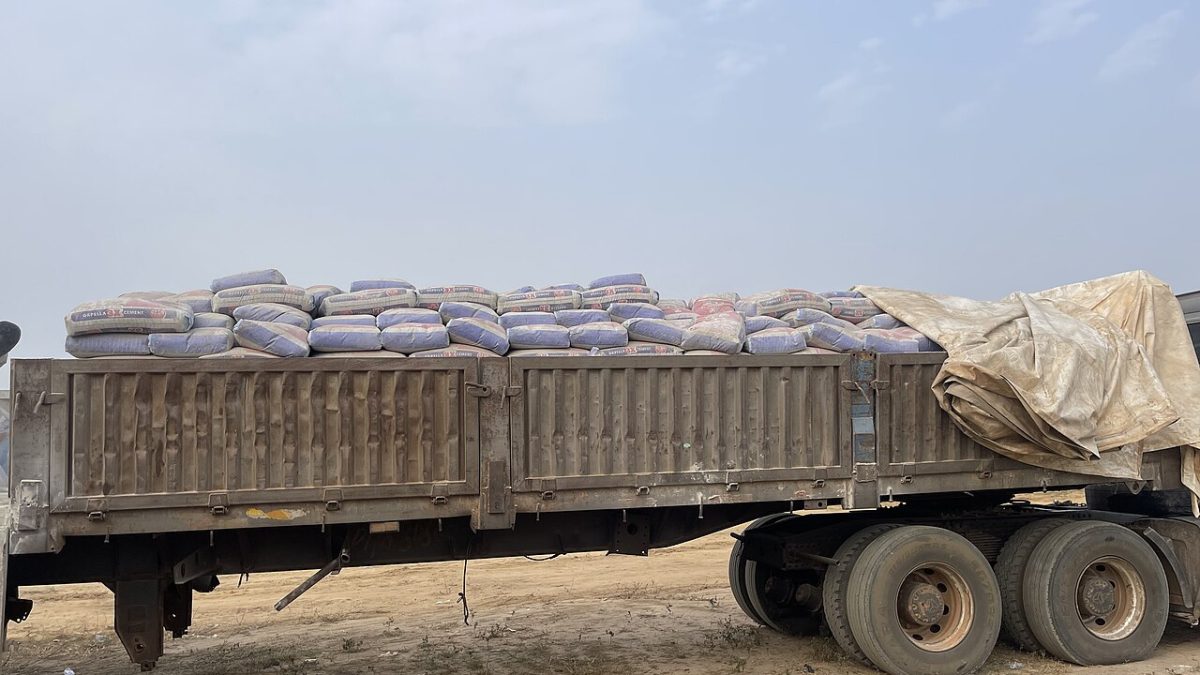
Cement is the single most important — and most bought — building material in Nigeria. Knowing how much you need before you start prevents running out mid-construction (which stalls work and raises costs) or buying too much (which wastes money and storage). For a standard 3-bedroom bungalow, expect to use 400–650 bags of cement in total, covering everything from foundation to plastering.
Cement Requirements by Building Stage
| Stage | Cement Bags (3-bed bungalow) | Mix Ratio |
|---|---|---|
| Foundation (strip) | 80 – 140 bags | 1:3:6 (concrete) |
| Foundation (raft) | 200 – 380 bags | 1:2:4 (reinforced) |
| Block moulding (~2,800 blocks) | 60 – 100 bags | 1:8 (blocks) |
| Block mortar (laying) | 40 – 70 bags | 1:6 (mortar) |
| Concrete columns and beams | 50 – 90 bags | 1:2:4 |
| Ring beam and lintel beams | 30 – 50 bags | 1:2:4 |
| Ground floor screed | 35 – 55 bags | 1:4 (screed) |
| Internal and external plaster | 100 – 160 bags | 1:4 (render) |
| Tile bedding and grouting | 20 – 35 bags | 1:3 (bedding) |
Grand total: 400–650 bags for a standard 3-bedroom bungalow on normal soil using strip foundation and hollow block construction.
Cement Requirements for Other Building Types
- 2-bedroom flat (ground floor): 280 – 420 bags
- 3-bedroom bungalow (standard): 400 – 650 bags
- 4-bedroom bungalow: 520 – 800 bags
- 4-bedroom duplex (2 floors): 750 – 1,200 bags
Cement Prices in Nigeria (2026)
| Brand | Price per 50kg bag |
|---|---|
| Dangote | ₦8,500 – ₦11,500 |
| BUA (Elephant) | ₦8,000 – ₦11,000 |
| Lafarge WAPCO | ₦8,500 – ₦12,000 |
| Regional / imported | ₦7,500 – ₦10,500 |
Buying in bulk (20+ bags at once) typically saves 5–10%. Prices are lowest near manufacturing plants — Dangote's major plants are in Obajana (Kogi), Ibese (Ogun), and Gboko (Benue).
How to Reduce Cement Usage Without Cutting Corners
- Use hollow sandcrete blocks rather than solid blocks. Hollow blocks use 35–40% less cement while achieving the same structural performance when properly reinforced.
- Maintain correct mix ratios. Over-cementing does not make concrete stronger beyond the design ratio — it wastes cement. Always use proper mix designs.
- Use a vibrator for concrete pours. Properly vibrated concrete achieves full design strength with less cement than poorly compacted mixes.
- Do not use dirty aggregate. Sand contaminated with clay or silt weakens concrete and requires more cement to compensate. Test your aggregate before bulk purchase.
- Cure concrete properly. Wet-cure for at least 7 days after casting. Poorly cured concrete loses up to 30% of its design strength.
To calculate the exact cement requirement for your specific project and get a full material schedule, use our free Nigeria Building Cost Estimator.
Ready to Calculate Your Building Cost in Nigeria?
Our free Nigeria Building Cost Estimator generates an accurate, itemised Bill of Quantities in minutes — tailored to your location, house type, and finish level.
Calculate Your Building Cost →