Nigeria's Climate: What Your Roof Must Survive
Before choosing a roofing material, understand what it will face. Nigeria straddles two major climate zones: the humid tropics in the south, and the semi-arid Sahel in the north. Both zones impose extreme conditions on roofing:
- Annual rainfall: 1,500–4,000mm in the south; 250–800mm in the north. Heavy rain events can deliver 50–100mm in a single hour during the wet season.
- UV radiation: Nigeria sits between 4° and 14° north of the equator. Solar UV intensity is significantly higher than in temperate climates, degrading polymer materials and fading coatings rapidly.
- Temperature range: Surface temperatures on a metal roof during the dry season midday can exceed 70–80°C. Thermal expansion and contraction stresses all roof fixings.
- Humidity: Coastal Nigeria regularly exceeds 90% relative humidity, accelerating corrosion on improperly protected metals.
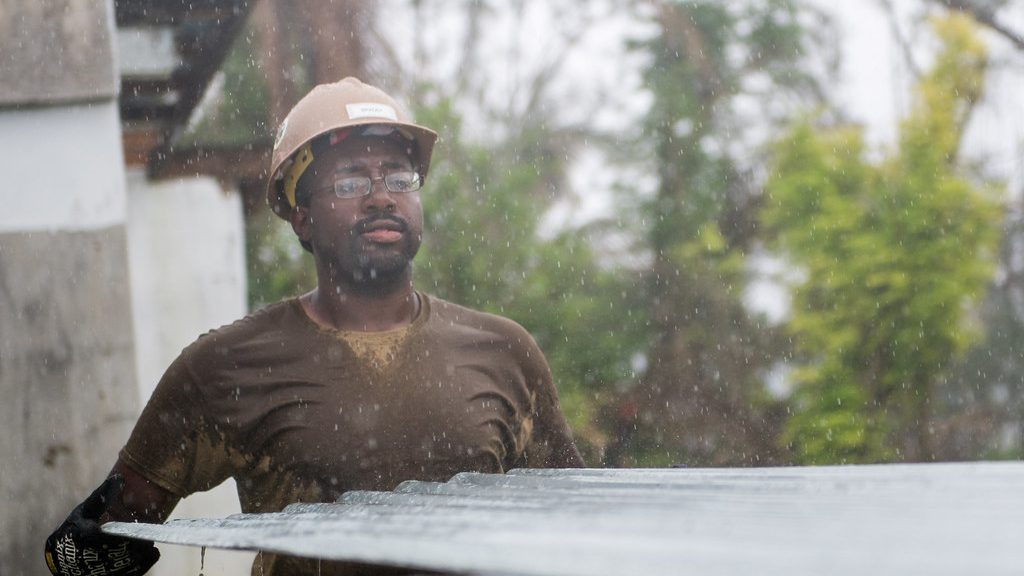
- Wind: Seasonal storms, particularly at the onset of the wet season, can deliver wind gusts of 80–120 km/h in the south and harmattan-driven winds in the north.
A roof that fails under any of these conditions creates internal water damage, structural deterioration, and costly emergency repairs. Getting the material choice right from the start protects your investment for decades.
Material 1: Long Span Aluminium Profile Sheets
Nigeria's dominant roofing material by volume installed. Available in three main profiles: corrugated, box profile (long span), and step tile.
Performance in Nigerian conditions:
- UV resistance: Aluminium reflects rather than absorbs UV, making it inherently UV-stable. Factory colour coatings (polyester, PVDF) add further resistance. PVDF-coated sheets maintain colour for 15–20 years; polyester coatings fade within 5–8 years.
- Rain noise: This is the most significant quality-of-life issue with aluminium roofing in Nigeria. Heavy rain on a thin aluminium sheet is extremely loud — the difference between 0.40mm and 0.55mm gauge is noticeable, but even 0.65mm aluminium is significantly noisier than stone-coated or tiled options.
- Heat performance: Aluminium is an excellent heat reflector, keeping more heat out of the building than dark-coloured tiles. With roof insulation underneath, heat gain is further reduced.
- Wind resistance: Properly fixed with seam fixings, long span aluminium resists high winds well. Improperly fixed with screw fixings only through the sheet (rather than through clips), it can be peeled off in storms.
- Lifespan: 15–25 years for 0.55mm gauge with quality factory coating; 8–12 years for budget 0.40mm sheets.
Material 2: Stone-Coated Steel Roof Tiles
The fastest-growing roofing category in Nigeria's middle and upper-income housing market. A galvanised steel substrate with an acrylic base coat and crushed stone chip surface.
Performance in Nigerian conditions:
- UV resistance: The stone chip coating provides excellent UV shielding for the steel substrate. Quality brands (Gerard, Metstone) show minimal fading or coating degradation over 20+ years in tropical conditions.
- Rain noise: The stone coating absorbs sound very effectively. Rain noise is 60–70% quieter than aluminium, making this a significant quality-of-life improvement.
- Heat performance: Slightly higher heat absorption than aluminium (due to the stone surface), but the mass of the tile system stores heat and releases it gradually, moderating indoor temperature swings.
- Wind resistance: Stone-coated tiles are individually fixed with interlocking clips — they resist high wind uplift better than sheet roofing when properly installed.
- Lifespan: 40–50+ years for quality brands (Gerard, Metstone); 20–30 years for lower-grade domestic brands.
Material 3: Clay and Concrete Roof Tiles
Traditional premium roofing, used globally for centuries. In Nigeria, concrete interlocking tiles are more common than clay, as clay firing is less readily available.
Performance in Nigerian conditions:
- UV resistance: Clay and concrete tiles are inherently UV-stable — they are inorganic materials that neither fade nor degrade under UV exposure.
- Rain noise: The mass of clay/concrete tiles absorbs sound very effectively — one of the quietest roofing options available.
- Heat performance: Excellent. The thermal mass of a tiled roof acts as a heat buffer — absorbing heat slowly during the day and releasing it slowly at night. Combined with proper roof ventilation, concrete/clay tiles provide the best passive thermal performance of any common roofing material.
- Weight: The major limitation. Concrete tiles weigh 40–55 kg/sqm; clay tiles 30–48 kg/sqm. Compare this to 3–7 kg/sqm for aluminium. The structural design of the roof must account for this additional load.
- Lifespan: 50–100+ years with virtually no maintenance.
Comparative Summary Table
| Criterion | Long Span Aluminium | Stone-Coated Steel | Clay/Concrete Tiles |
|---|---|---|---|
| Rain noise | High (poor) | Low (good) | Very low (excellent) |
| UV resistance | Good | Excellent | Excellent |
| Heat reflection | Excellent | Good | Good (thermal mass) |
| Wind resistance | Good (if well fixed) | Excellent | Very good |
| Lifespan | 15–25 years | 40–50 years | 50–100+ years |
| Cost per sqm (materials) | ₦2,800–₦4,800 | ₦8,000–₦14,000 | ₦5,500–₦11,000 |
| Maintenance requirement | Low–medium | Low | Very low |
| Structural load | Very light | Light–medium | Heavy |
Our Recommendation for Different Scenarios
- Budget rentals, farm buildings, commercial sheds: Long span aluminium (0.55mm minimum, quality brand). Best cost-efficiency for structures where noise is not a concern.
- Owner-occupied residential homes: Stone-coated steel tiles (Metstone or equivalent). The noise reduction alone justifies the premium over a lifetime of occupancy. This is our top recommendation for most Nigerian residential builds.
- Luxury homes, heritage buildings, long-term investment properties: Clay or concrete tiles where the structure can be designed to carry the load. Virtually maintenance-free for 50+ years and adds significant aesthetic and monetary value.
- Harsh coastal environments (Lagos Island, Port Harcourt waterfront): Stone-coated steel or clay tiles. Aluminium is vulnerable to salt spray corrosion at the coastline, even with factory coatings.
Are You Ready to Estimate Your Building Cost in Nigeria?
Stop guessing and start building with confidence. Our free Nigeria Building Cost Estimator generates an accurate, itemised Bill of Quantities in minutes — tailored to your location, house type, and finish level.
Start Your Free Estimate →